|
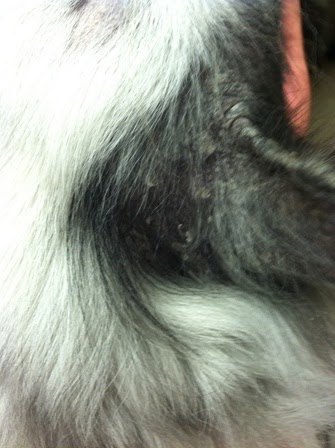
| Rizzy, sleeping at the Receptionists desk. |
We all have a foundation of belief that motivates us to move in a certain direction. As we move down that path the question becomes; How does our perception influence our belief? If the foundation is a belief is the rest of the road determined by perception?
I had a long talk with a rescue advocate today. We were talking about joining forces to help each other with the common goal of helping pets.
After a long conversation it seemed to me that she was trying to assess where I stood on many "hot animal topics." She is obviously dedicated to helping rescue pets (a subject very near and dear to my heart), and understanding how her efforts to address their challenges, needs, and problems can be resolved. She was also asking me about my perceived role in doing the same. Seems like a reasonable question. Vets have the answers to so many pet problems, So why wouldn't vets be doing more to help alleviate them?
The questions seemed to center around utilizing veterinarians to provide more for less. Hence, bridging the gap between need and availability. They included questions about; Why are we charging perceived high prices (example $15 for a nail trim) for what we do? If we gave our services away, or charged less, the services and goods would help more people and save more pets. A simple marriage of ethical obligation and economics.
So, how did her perception of where the help is needed become a query into how vets can do more for less?
It got me to thinking? DO people think that vets are the source? Or even a part of the pet,,,,whatever,,,problem?
I suppose people do.
Her litmus test for me, as a way to seek out my intentions and beliefs revolved around two questions.
Question Number 1. "How do I feel about vaccinations? Because veterinarians use yearly vaccines as a way to get people into the office AND because we over vaccinate."
Was I offended by the question? No, I wasn't at all surprised by it. It is a commonly held perception.
"At my clinic we use a three year distemper combo vaccine, and a three year rabies after the first year." That's my official answer. I gave her what she wanted to hear..but it isn't the whole truth.
Perception vs Reality Statement Number 1
Why don't other veterinarians use three year vaccines? Because I think that they believe that most people won't come back for their annual physical examination unless their pet also needs a vaccine.
For this reason there are veterinary practices now offering "Free for life vaccines." How is the perception different from the reality? Well, I believe that the most important part of bringing your pet to the vet is in the conversation that you have with me, and the things that your pet tells me. It is in the yearly examination,,not the vaccines. How do you get the most value out of your pets yearly exam, regardless of the vaccines needed? The primary care giver(s) should go with the pet. For some pets the examinations should even be more often then yearly. For young (1-6 months old) and older pets (cats and small dogs at age 8, large dogs age 5) I recommend an examination every 6 months.
The answer was given to address her underlying question, and still the perception is not wholly reality. How do I address the belief that the people won't come back? I recommend Lyme, Leptospirosis, and kennel cough vaccines be given yearly (the interval they are good for). For cats we stagger the 3 year vaccines..so that at least two out of every three years we see them..and I beg for the other. Do we over vaccinate pets? Yes, we probably do. That's why titers are a great option. But the problem with running a vaccine titer is that they are about three times as expensive as vaccinating. Ask me what's better for your pet. I will give you a list an arm lengths long. But it will be tailored to your pet. That's the value in my service and expertise.
And, sometimes, regardless of my deep seeded discontent in repeating this over and over, I still say, "I don't make any decisions based on money." Although should you ever be foolish enough to open your own business you SHOULD make decisions on what to do based on what is profitable. But for whatever reason it is not ethical to make decisions about running a business focused on pets based on profits..
I often want to remind those seeking free and discounted pet services, that I spent four years in high school and vet school getting A's so that I could get into vet school. It was decades of grueling, stressful sacrifice. And, after all of that I am asked and often expected to work for free, undermine my own business, and feel terrible guilty with every decision. It is not a profession any successful, business person who truly loves animals should ever venture into. There is a reason veterinary medicine is becoming corporately driven and owned. They can do it without guilt or remorse from a tower far, far away.
 |
| Bentley, here for his dental yesterday. |
Question Number Two;
"How do I feel about RAW diets?"
Perception vs Reality Point number Two;
I am a scientifically trained doctor. If the evidence points to something as being inherently dangerous why are people still choosing to use it? There have been multiple statements made and published and still the public ignores this. Is it because they think we are paid by food companies? (See the AVMA policy below).
I use prescription food exactly the same way I use prescription drugs. Do I make money off of the drugs I sell and the food I sell? Yes. But I don't care where you buy them. You can buy your drugs from me, from the human pharmacy, and the same goes for food.
Do I think that some people believe that their pet benefits from a raw diet? Yes. But did they try other diets? Did they ever get a professional opinion? If you, or your child were ill would you go to the grocery store to get advice about what to feed them? Do you think that the untrained attendant at the grocery store isn't going to sell you a food that they don't carry? They are trained to sell only what they carry. I don't know of one person on a raw diet because an accredited veterinary expert recommended it. People really hate that answer, I know. Although I still don't understand why?
She then went on to regurgitate the same slanderous misleading jargon that I hear everyday from people with no business calling themselves an "expert" in anything..it is usually about "prescription diets being inferior because the label starts with"..., or "the benefits of grain free, holistic, all natural," etc. etc. Unfortunately, the public has been mislead into believing that the perceptions of good food companies, and good products are not reality. Worse yet, you all were lied to by other food companies..or people who are willing to risk you and your pets lives because they no longer trust "the establishment."
If you want advice about food see a nutritionist..and if you don't believe that we have your pets best interest in mind then we have failed you and your pet.. Every nutritionist that I know is only providing advice for one single thing..(like the rest of us in veterinary medicine),, to help your pet. But be careful who lays your foundation of belief and who provides your perception of what is optimal for your pet..
Somewhere along the line the people who spent decades learning about how to help you take care of your pet lost their credibility and the advocates for pets became the outspoken but untrained. A veterinarian spends years to earn their DVM. Then we spend many more to understand the big picture and how every single participant influences it. You can't do it with one dog, one case, and one perception.
My advice; If you need expert advice for your pet go to a medically trained certified veterinary professional. If you don't like that advice get a second opinion..and if you are looking for an answer that's not the answers you get then ask yourself why? And what your perception might be?
 |
| Skittles. Found on the side of the road. The people who found her believed that she was blind and suffering. They believed she should have been killed. In fact, she is visual, happy, and will be just fine. She is with us, and looking for a home. |
Where is my reality fading from perception?
I believe that helping each other is group effort, and this infighting divides us from our goal. And, I don't want to be a part of the problem as I try to be a part of the solution.
What do I believe is at the heart of her questions?
Trust.
That one simple word. It defines everything we do, are, and hope to become.
Related Articles;
The Raw Food Blog
Raw Pet Food AVMA Policy
 |
| Charlie.. Whose perception and reality are one in the same.. Magpie is going to school him about who is in charge. |
And if you have a pet question you can ask me, or any of the rest of us pet lovers, at Pawbly.com. Pawbly is an open platform to help people and their pets. It is always free to use.
Or find me at the clinic, Jarrettsville Vet, or on Twitter @FreePetAdvice.
And as always,
Always Be Kind..