Showing posts with label urinary blockage. Show all posts

Saturday, September 21, 2024

Blocked Cats, UO, How Far Has Veterinary Medicine Fallen?

Blocked cats are my professional obsessive jam. The urinary blocked cats, this one disease which is almost always curable, (and, lets be real honest, how often can we say that in vetmed?), affects primarily young otherwise perfectly healthy cats. It is also the most egregious example of how far vetmed has distanced itself from helping the patients who need us most. In the olden days, (i.e. the days of my formative veterinary exposure, when the music was 80's pop and the hair was big), the vets that I worked for would have never-ever, ever, even contemplated turning a blocked cat away. It wouldn't have mattered whether it was 5 minutes until closing, or, if we had never seen the cat/pet parent before. Nothing would have stopped the vets of the days before the specialists, the fancy ER's, corporate ownerships and astronomically expensive off-shore vet schools from treating these cases, and doing it affordably. Vetmed was so honorable in those days that we offered help and asked for payment later. There was a foundation of trust, a pragmatic approach with integrity, and every vet knew that they had to treat or the guy down the road would. We never passed the patient by. We always had the practices credibility on the line. Every client mattered, and, therefore every pet mattered. Euthanasia was reserved for the cases that failed to get better after we had done our best to provide what our patients needed, never before. 

UO (urinary obstructed) cats are the best example I can give of how much vetmed loves money, and how horrifically we fail the most underserved and vulnerable among us. If I had one wish it would be that every single veterinarian loved this jam as much as I do. Every single veterinarian would see these patients as miracles just awaiting our healing hands and a little reconstituting from a slow iv drip. How can I help other vets see these cases this way? How can I inspire and motivate a whole profession to look deeply into the eyes of a treatable feline, remind themselves to invest all that we are, and save them all? How can I remind us to be kind, to be compassionate, to help people who desperately love their pets like family, and  save the world, just because we can?  


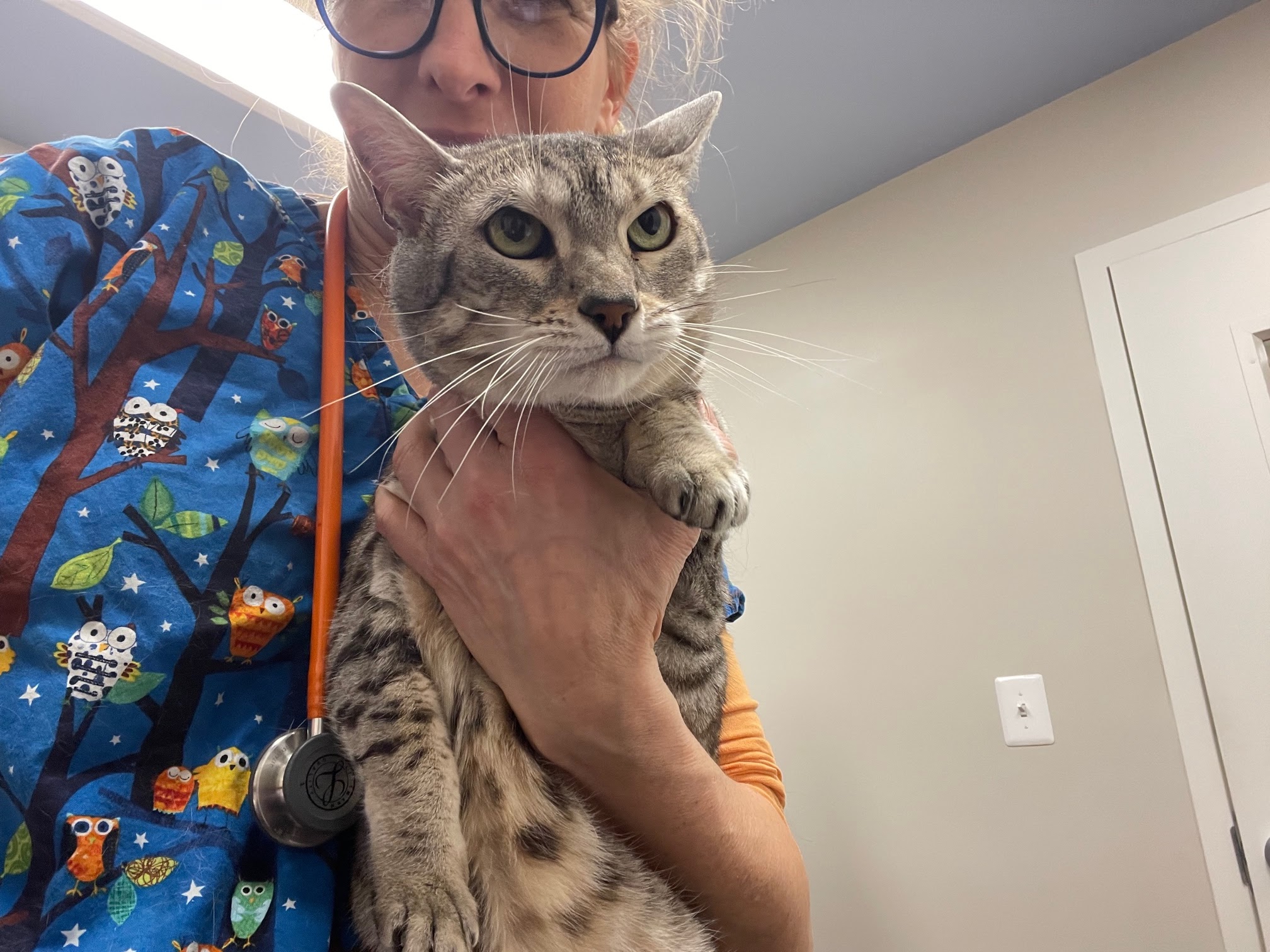
This is Figaro. This is his story. His life, his chance at surviving his acute urinary obstruction, and all of the accolades, frustrations, desperations, and phone calls his mom had to make to save him. This is what vetmed has become. It is also everything vetmed should be ashamed of having become. 

Figaro is a young, healthy cat who has been loved, cared for, taken care of his whole life. He has been to all of his vet visits, and his mom has done everything she was ever told to do for him. He was perfect and loved, until he was sick, very sick, and his mom rushed him back to the place she knew he belonged. The place where people would help him.

Figaro's mom noticed that he was not feeling well. He wasn't walking normally, and he wasn't eating or drinking. She called her vets office immediately and they told her to take him to the ER. Which is technically the right answer, and all too often the only answer most small, private practices, already too busy to stay on time veterinarians will give. The biggest problem with this answer is that this is too often a place that most pet parents cannot afford to utilize. Most pet parents walk into an ER expecting that the veterinarians will help them. Save the lives of the pets they adore, and be treated with hope, respect and compassion. This is what you will get if you have deep pockets. Financial stability and access to about $3,000 to $30,000. This is what vetmed is today. This is what all of the things that veterinarians, corporate ownership, and lust for profits, salaries and mental well-being cost. It just costs lives too.

Figaro's mom went to her vets office anyway. She knew them, they knew her and she wasn't comfortable being sent somewhere else. They left her in the waiting room, took her cat to the vet in the back and the vet palpated a full, hard bladder and knew he was blocked. She sent her to the ER.

This is Figaro's mom's letter about her experience. I asked her to write it because she is not alone. Figaro is one of so many that I see. Figaro's mom was just brave enough to share her side. She is a survivor, and now so is her cat. She is an advocate, a voice, and a beacon of hope that the profession will start to listen. 

Maybe if enough people start to ask themselves how their part contributes to this responsibility will will begin again to protect with compassion. We will do so because we can, and because we want to. Because this does save the world. It does pay forward, and it is what we owe those who came before us and those who will follow after us.


The ER did what they always do in these cases. They alert you to the cost of the exam. The technicians collect a history and your pet goes to the back for an exam. The exam reveals a hard, painful bladder that cannot empty. You are given an invoice with every possible diagnostic needed, every bad turn, and every worst case scenario covered. In the last decade the estimates for this have gone from $2,000 to over $8,000. 

Figaro's mom was given a $2,700 estimate.

I don't send people to the ER without warning them of the estimate that they will be given. Why? Well, because I didn't go to vet school to send my patients to a euthanasia based on economics. I didn't go to vet school to send my patients elsewhere to be denied care. I didn't go to vet school to send my cases to other places who aren't going to help them. I didn't go to vet school to have my clients feel ashamed, embarrassed, humiliated, and helpless. In some cases these otherwise young, healthy perfectly normal perfectly fine cats are euthanized as the most "compassionate way" to treat this disease. We call this economic euthanasia. In other cases the pet parents can only afford a quick unblocking and then they get sent home. This treatment option, although relieving the immediate problem, makes the next unblocking (you the ones I get asked to do a day or two later) much harder to do. 

Figaro's mom had access to $400. Her estimate at the ER was about $3,000. They, (to which I have to add that I am surprised and hopeful that this is the first crack in the facade of finding a way to provide care outside of the approved corporate income driven recipe), offered care based on the clients ability. Was it great care? No. Was it ideal care? No. It was a quick palpation to diagnose and a passing of a urinary catheter to remove the obstruction and then he was sent home. 

He was sent home without all of the care he needed. He was heavily sedated, poorly responsive and his mom had been firmly told that Figaro needed to eat a special diet, and only this diet, for the rest of his life. He was so depressed, chemically incoherent and incapable of walking, eating, or responding to her pleas to eat the food and use the litter box (therefore proving to her that he wasn't blocked again). 

Figaro's mom called her vet the next morning. They couldn't fit her in until the next day. She was so worried that he needed to be seen sooner that she started calling other vets offices. She called explained Figaro's dilemma and then added that she had no money left. She kept calling when everyone turned her away.

She called us and told us that she was worried he had reblocked. We told her to come in to see us immediately. It helped that I was at work and the staff knows that this is my jam.

Figaro was not blocked. He peed as soon as I gave his bladder a gently squeeze. He was gorked on the medications from the ER, and needed the extra time that the $2,300 would have gotten. He needed intravenous fluids, pain medication and an antibiotic. He needed the toxins that build up in the kidneys after you cannot pee to be flushed out. So that's what we did. Figaro only needed a few things from us. He didn't need a long stay, or an expensive list of invoiceable items. He was a cat who needed just a little more help, with a mom who needed help on how to take care of him. Figaro and his mom needed us to be what all of us should be. Helpful on their terms.

The next day we got a call from our local Animal Control. They wanted to confirm that Figaro had been seen by us?

Seems someone had dropped a dime on Figaro's mom for cruelty and neglect after she had failed to show up for the recheck appointment she said she would. 

Here is where Figaro's story takes its next troubling turn. What was Figaro's mom supposed to do? She knew he needed help so she reached out to the place she had always gone to. They sent her elsewhere. They sent her to a place she couldn't afford. Then they give her a discounted service that isn't enough for her cat, and then call Animal Control on her. They report her. 

If she hadn't found us it is very likely that he would have been in much worse shape the next day, or that they wouldn't have given her a way to pay? What then? Likely AC would have forced her to find a vet, or, bring him to the shelter to be euthanized. Figaro deserves better, so does his mom.


Our Office Manager called the ER to inquire about why they called Animal Control to report her. This is the reply they gave us.

I did call the ER to discuss Figaro.  I spoke with their Hospital Director.  Please see highlights below from our conversation -


  • ER saw Figaro to unblock him
  • Owner only wanted Figaro unblocked and wanted meds to go home. 
  • Owner seemed untrusting of ER and did not seem to understand how critical a blocked cat can be. 
  • ER discharged Figaro under the impression he would be seen at original vet office the next morning, however no Direct Transfer of Care was in place
  • ER has a pamphlet that they give clients who are struggling financially.  The pamphlet includes resources and information for Vet Billing, they did try to point her in the direction of Helping Hands and let these folks know they should try to find a vet that accepts payments.  I am surmising that this may be where they get our information from, if they go to the VetBilling website and search for a vet in the area who participates they find us. 
  • The following morning owner called as Figaro was not doing better, they were surprised that she was reaching out as she had told them initially he would be seen at her original vet office.  It was in that conversation that she told them that she did not have an appointment with original vet office until the following day, 8/28
  • It was at this juncture that they did call AC for a wellness check - they were concerned that owner did not understand how critical Figaro was and that she had been dishonest in when he would be seen.  They were concerned he would not be seen at all.
What would you do?

What would anyone with limited resources and a pet they love who is in desperate need of help do?

How does this profession address these cases? 

How does the veterinarian, who is justly worried about Figaro, do?

It is with all of this in mind that Jarrettsville Vet has started to have these discussions.

This is the letter we are now using with clients when we can't decide what to do with a case that burdens our hearts, pulls our compassionate souls from our guts, and leaves us unable to sleep at night. 

“We care about your pet and your pets care.  We are concerned that there was not a follow up appointment after the veterinarian recommended it. Your pets condition was not stable enough to provide a dismissal of care. Please call us to arrange a recheck appointment or let us know if you found a recheck appointment elsewhere.

If you have any concerns about the cost of this care, or any future care here at Jarrettsville Veterinary Clinic please call and ask for me or one of the other managers. We will be happy to offer options for you and your pet.

We have called the numbers we had on file and sent an email to address you provided. We hope to hear from you by the end of business tomorrow. If not we will these concerns on to animal control to be in accordance with the state mandates. “

What do you think?

Here is what the ER has come up with to help cases that come to us.           

The ER is 100% on board to do this and do regularly do so with a Direct Transfer of Care.
  • With a Direct Transfer of Care they will send everything in place.  They will suture in a urinary catheter, send IV, etc.  They also will not fill meds there as the client could fill cheaper at their regular vet.
  • A conversation between doctors is what initiates the Direct Transfer of Care.
  • In the past owners have said they were transferring to their regular vet and didn't, they had a pet return septic when a catheter had stayed in place.  Therefore they will not leave everything in place without that conversation.
  • If one of our clients is in conversation with one of our doctors about transferring care it is important that our doctor reach out to the ER so the Direct Transfer of Care can be in place.

Here is the site for Maryland reporting of animal cruelty

So where do I go from here with my resolute disbelief of how far we have come, and how much we are enabling suffering for both our clients and our patients. Well, I suppose you will have to wait and see.

Saturday, January 6, 2024

The Blocked Cat. The Approach To Get Out Alive. Part Two

Cats with a urinary blockage always need to be addressed as an emergency. Unless you have experience with this condition before almost all of these patients arrive at the clinic as an emergency. Most commonly they have been blocked for some period of time and this leads to a higher likelihood of either bladder rupture or toxic changes to the heart. 

Beau. Blocked three times. $8,000 for two ER trips, 
then he found us. Third block and a PU surgery; $1500 on a payment plan.

I have to recommend that you go immediately to a vet if you suspect that your cat has a urinary blockage. I also have to caution that most clinics either refer to the local ER, or, charge a hefty price to treat this. 

Please go back to the first blog in this series now (go here) if you haven't read it already. The first chapter will define what a urinary obstructed cat looks like. 

The singular goal of this is to get your cat out alive. If you are like most of us you live in financial constraints and your cat is a vital, beloved member of your family. The profession knows this, and the profession has profited greatly because of it. We know you love your cat, and we know your cat is going to die from this, soon, if you don't cough up the admission fee for us to treat it. It's the culture of the American way. Make as much money as you can from wherever you can. Ask yourself how you are a part of the problem and then ask yourself what you are doing about it. Sure, I am disappointed in my profession for killing so many treatable pets, but, this is the world we all decided to emulate. Every rich person has profited from the misfortune of another. Medicine should be the neutral, sacred territory. It isn't. 

Here is my professional advice, as a veterinarian of 20 years, on getting your cat out alive when they have a urinary obstruction (aka a blocked cat). 

Tips; 

  • be nice
  • be honest
  • be insistent
  • be ready to challenge every interaction
  • never lose hope
  • never walk away without knowing that the only advocate in your pets life is you
  • be willing to surrender your cat if it means it might save their life. 
  • ask for help from everyone. Build an Army around your cause and then help pay it forward. If you find a way to get out alive pay that forward to someone else. The current practice of blocked cats in almost every ER setting is so expensive it is forcing most of these cats to either suffer or be euthanized. There are only these two options. Why is it that we allow these cats to go home and die a horrific death of suffering? or shame you into paying for something that has such an incredible mark up we lose the ability to heal? 
If your cat is demonstrating any of the clinical signs listed in the first blog on this (see here) then you must bring them to a veterinarian. 

Start with the exam. Blocked Y/N if YES, then ask for a written copy of the exam findings. Immediately. If the staff or vet declines, ask them to give a verbal description using the form provided below. Do not leave your cat without this. You should always have a copy, or have documented a detailed list of what has been done for your cat and what you have consented to. This is very important to help manage your cAts care and the expense associated with it. A blocked cat should be diagnosed by physical examination alone. The cat will often have a painful bladder that is hard, large and unable to be expressed (able to produce urine). If you sign anything ask for a copy of it immediately.

From the initial examination an estimate is given for the expected, or recommended, treatment plan. Here is the first place that negotiations should begin. Here is the first place where I recommend that clients challenge the options being presented. 

Next; 
Is the estimate is affordable? IF YES, (your cat is blocked) and the estimate/deposit required is affordable walk away. Sign paperwork, get a copy, and walk away. Your cat is in good hands, and the safest place they can be. The veterinary clinics are set up to provide top tier medicine and provide appropriate treatments for the worst case scenario. The problem is that most people cannot afford this, and, in almost all cases you are charged for worst case scenario treatment even though most cases do not require them to be successful. The veterinary clinic benefits greatly by being prepared to treat your cat as the worst case scenario outlier even though most are not. No client should have to pay for Gold Standard care if the case does not need it. Further, if you cannot afford the first estimate you should be permitted to be given the treatment plan tailored to your cats needs at a price you can afford to get the best possible outcome. THIS IS NOT BASED ON THE AMOUNT OF TIME YOU CAN AFFORD, BUT THE CARE YOUR CAT NEEDS. I recommend that your cat stay on iv fluids and with a urinary catheter in place for a minimum of 3 days. Your cat should stay in their care until urine runs clear. Your cat decides the length of stay,, not the hospital. They should do the following; full blood work. ECG, abdominal radiographs, do ultrasound, do urine culture and sensitivity. Provide analgesics, appropriate urinary diet, appetite stimulant, stress free housing. The cost of this at a specialty hospital with ER has been reported as $6,000 up. Reminder; your cat has a chance of re-blocking. I.e. you and your cat may be back here again, soon. Budget accordingly. 

IF NO;
If the estimate is not affordable; No? Everything from here is based on budget and time. The house decides your cats prognosis based on your budget. The smaller the budget the less ideal the care. Why do they get to decide that?


If blocked and you cannot afford the estimate; ask for all of the diagnostics to be declined before cutting the in hospital time. If the hospital will not do this ask to see the manager. Ask for the reason in writing. Do not leave with out this. There is this incorrect notion that vetcare is a one way street. We tell you what to do, and how much it is going to cost and you either pay or you hit the road. It is not the case. Veterinarians can decline to treat, but they are expected to give you a place to go for care. You can decline line items. You can ask for written prescriptions to fill elsewhere, and NO they cannot charge you for this. You can decline all diagnostics and ask for your cat to be unblocked. You can even decline pain medications, although I strongly disagree with this. Unblocking your cat, providing fluids (even in the case of a fluids kit you bring home to provide SQ fluids at home) is an option. Taking your cat home after they have placed an iv catheter and a urinary catheter is your right. In cases where the cost of care is so high I recommend that you tell the vet that you are transferring your cat to another clinic and they they be transferred with BOTH the urinary and i.v. catheter in place. I know of many (in fact I know of only 1 case where this was provided). In all other cases the specialty practice pulled BOTH catheters and then sent the cat to me. I had to replace both and this was detrimental to both the patient and the client. IF you paid for these you own them. Remind the practice this after you pay. (See form below).

If you cannot afford anything ask for a cystocentesis to remove as much urine as possible, go home find a general practitioner who will help. Call every rescue, shelter, veterinarian, put out a social media plea. Start a fund raising campaign. Offer to surrender your cat. Any person who refuses to surrender their cat appears more interested in ownership then compassion and the life of their pet. 

<$500; exam, comatose cats can be catheterized without sedation or analgesia. Take a video of how your cat presents to the ER. Ask if sedation is needed? If not it should be removed from your invoice. place urinary catheter ask if you can go home with sq fluids kit and urinary catheter in place. The act of placing a catheter is traumatic to the urethra that is already not functional. Placing and then removing before the tissue has healed is problematic, if not further worsening the cats prognosis.

Decision Tree;
blocked -> Yes, AND I can afford the suggested treatment plan., sign forms, get copy, go home. See you in a few days. (Warning patients can re-block in days to weeks).

Blocked-> Yes, BUT I cannot afford first treatment option provided; I would like to decline all diagnostics to have a urinary catheter and iv catheter placed, and at least 3 days of both with in hospital care.

Blocked-> Yes, not enough money for multiple days iv fluids and urinary catheter treatment, then place both and take home. Find a vet who will help at an affordable price. Give this directive in writing. If your vet pulls the catheters after providing written or verbal directive see your State Veterinary Board and file a complaint. 

Blocked-> Yes, cannot afford urinary catheter or iv catheter, decompress bladder (place a needle in the bladder and remove as much urine as possible. This will buy you a few hours to find a vet who can help. (Find me in Jarrettsville Maryland, or Denton County Animal ER in Denton Texas).

Pet Parent Consent For Care Form here.

If you know of someone who provides affordable, transparent care for blocked cats I want to hear about it. Email me at krista@pawbly.com

Friday, April 21, 2023

Blocked Cats; My Cause and My Advice

A "blocked cat" in vetmed terms is a cat who cannot pass urine normally, or, at all. "Blocked" refers to urinary bladder blockage. A blocked cat is a medical emergency and should be treated as such.

Here is how I treat a blocked cat, and, why/how these cases often come to find me.

Stripes. Presented blocked and unhappy about it.

The typical scenario for a blocked cat presentation is this;

  • Cat is in and out of the litter box, 
  • Often crying, meowing, and/or, in distress 
  • Little to no urine is being produced

Client and blocked cat show up at vet office or ER. Cat is examined and owner is asked to produce a $2,000 deposit for care. Most struggle to afford this. Many cannot. Therefore, they call me for help.


Here is a look at how I manage blocked cat cases with financial constraints at my veterinary practice.

Almost all cats can be diagnosed without diagnostics (outside of the above mentioned physical exam and history).  I DO NOT RUN DIAGNOSTICS IF IT WILL AFFECT A PATIENTS ABILITY TO RECEIVE TREATMENT. This is a practice that has become all too common place and the systemic practice of economic euthanasia to allow for diagnostics is unethical and warrants state board and AVMA scrutiny and policy changes.


KEY POINT; This should be provided in documentation after the examination is done. At each client documentation/signature request the client MUST get a copy, and, there MUST be current patient status listed. A client has the right to deny diagnostics and still receive life saving care. The egregious practice of turning away clients if they will not meet a practices proposed standard of care, and the corresponding costs associated with them, is also in need of AVMA and state board examination. We allow the euthanasia of patients because we reduce them to property status when it suits our prejudice and financial gain discretion. A blocked cat is typically young, otherwise healthy and free from any other medical conditions. They may present looking, and feeling, bad, but, they are treatable in almost 100% of these cases IF UNBLOCKED.

Urine, rally bloody, from a recently unblocked cat

I am going to describe the typical blocked cat cases that I see, and, how I manage them. Almost all of these are owned by people who have financial limitations. I am also providing challenges to the typical way an ER manages these cases to help highlight areas we can help allocate resources to as I call it, “get out alive.”

                First challenge; diagnostics are not needed to diagnose. Short of a very obese cat a competent physical exam AND thorough history will diagnose the majority of these cases. Why does everyone run diagnostics? Why, again, are we not talking about the client’s budget at the beginning of spending their money?

                Second challenge; diagnostics, regardless of their findings do not influence the care needed. ALL of these cats need to be unblocked immediately. In some very rare cases there are some patients who should not be treated, or, have a poor prognosis regardless of treatment. (i.e. geriatric cats with comorbidities, fractious, feral, unknown rabies history, cats we will not be able to safely manage fluids/urinary catheter on, loss neural function, etc). These patients/clients deserve to be notified before treatment, or estimates, are provided. Futility* medicine should be as ethically bound as economic euthanasia defaults, and over padded invoices that prohibit care ability because finances have been drained in the diagnostic phase.


I would like to provide users with a step by step approach to their cats care. Challenge the suggested treatment protocols to save clients from economic euthanasia

Next challenge; vets do not talk to clients about managing financial resources to allow for the expected stumbles in this disease process.


Challenge; talk about whole pet care, not point of care emergency. Who else talks to clients like I do? I say, once we start treating we are all committed to a positive outcome. This is NOT based on financial ability. It is based on needed patient care. Vet med withholds this until it is perceived that clients are dry and then we offer euthanasia as the only affordable option.

Challenge; these cats are typically young (under 3-4 years old) and otherwise very healthy. We are over-euthanizing young, previously perfectly healthy cats simply because we have priced them out of care. These cases have been around for decades. Decades where we treated them at minimal cost and saved the majority of these cats. Why are more cats dying now? We priced people out of care while better educating the public on this disease. That is unethical. This needs to be challenged.

Challenge; why do we run blood work on ALL of these cats? And then tell owners that ALL of these cats blood work looks bad, because, well simply they are sick, they are critical and they do look bad. What were we expecting the blood work to look like? We do it to make money, and, we do it to CYA, and we do it because someone made us believe it was a liability otherwise? It’s time to challenge pricing pets out of care while we CYA.

Challenge ALL of these cats in my experience go back to perfectly normal blood work indices after their obstruction is removed and they are given time to recover. They do not start out in kidney failure although all of them have blood work that looks like kidney failure while they are blocked and present for care. Vets use this to their advantage when discussing euthanasia, or repeating blood work. It is deceitful.


In cases of financial limitations (this is decided up front at the first visit/interaction) we have an ethical obligation to discuss what we expect, what we have seen to be true, and that this is not a one and done fix. We need to start with a whole cat case approach, not a singular point in time under emergency induced emotional duress and take clients for a one and done as much as we can get them for and to-hell-if the cat is euthanized along the way approach. We know better, even if our clients don’t.

Challenge; This ridiculous, archaic practice of not having vets discuss money (see equally ridiculous reasons here)

Challenge; most ER vets are unblocking without general anesthesia between cases. We can do it so quickly that the charge given to the owner is exorbitant. In many cases we can unblock a cat in the same time it can take to pass an i.v. catheter.

Challenge a line item list of how a cat is unblocked is not provided to the client.

Documentation on the procedure and the time necessary to unblock is not provided. This should be provided before treatments are given AND confirmed before invoice is given. 

Challenge; Removing a urinary catheter before 72 hours, or before the urine is running diluted and clear is setting the patient up to reblock. I would argue that we use time based estimates which are always egregiously too short thereby setting the patient up to reblock. Veterinarians should expect, and do, the cat to reblock within a very short period of time. We make more money with the cats failure. The ethics of this should be challenged. If clients cannot afford to keep a patient in the hospital they should be allowed to be transferred to a primary care facility, i.e. their normal veterinarian (even if they do not have 24 hour care), and/or allowed to go home with the intravenous catheter AND urinary catheter in place to be monitored at home. Challenge; I have never seen this happen. In all cases these are removed by the ER facility. These critical goods are paid for and owned by the client. Removing them without consent is a breach of consensual care and a done to the detriment of the patient.


We should all expect that a cat that has blocked once, will soon block again. How many times can the client pay for this? We should be addressing this at the first visit. We should be using the clients ability for the expected treatment course, and not the typical one time financial hit. We require a deposit for care, and that deposit is typically exhausted within the first 12-24 hours leaving cats to be discharged before they are ready, and setting the client up for a repeat obstruction within days to weeks. Where a small percentage of cats are treated on the first obstruction many are not on the second. Further the trauma of the blockage compounded by the passing of a urinary catheter causes excessive damage to the patient urethra. I would argue that the removal of a urinary catheter prematurely causes an increased chance of reblocking and therefore makes the veterinary team responsible for re-current obstructions that frequently occur within days. 

The inflammation from BOTH the blockage AND the urinary catheter always needs more than 12-24 hours to resolve.

Challenge; a client pays for the goods and services provided to the patient. Why then do vets insist on removing these? At least we should unblock and transfer elsewhere to provide these patients a longer fluid therapy plan. We need to be documenting and insisting these cats continue care elsewhere. Even if this at the owners home, if it cannot happen at a veterinary facility.

Although not ideal we keep cats in our vet hospital for 3-5 days even though there is no overnight care.

These cats need fluid therapy AND urinary catheterization for 3-5 days.


Unblocking a cat at my clinic; Client call to front desk with any of the above clinical signs is sent immediately to the Charge Tech. They immediately notify a veterinarian of the cat being blocked. If the cat is an existing patient we direct them to go to the ER immediately, or come to us. Upon arrival we immediately  examine to confirm bladder is large, painful and no urine will pass. Do not squeeze too hard. Bladder can rupture. This is always a surgical emergency, financially constrained clients will not be able to afford this.

Treatment tree looks like this; 

  •  cold laser therapy of prepuce. Will reduce inflammation and allow some sediment to pass.  
  • massage penis to remove calculi. May allow urine to pass, 
  • attempt to place/pass a urinary catheter. Catheter selection matters, avoid tomcats and red rubbers, try Tom Tiddle, 3.5 french. Lots of lube! 
  • Start i.v. fluids as fast as able. These cats die from dehydration causing cardiac fatality.
  •  If unable to pass Ucath, try to relieve urethral obstruction with olive tipped syringe and 20 ml saline to retropulse obstruction back into the bladder. Lots of lube 
  • If unable to olive tipped syringe decompress bladder with 22 gauge needle. Remove as much urine as able. I leave needle in bladder and switch out 20 ml syringes until bladder is soft. Warning, bladder rupture is possible.  
  • Continue laser, massage and retropulsion with olive tipped. In almost all cases you can feel obstruction move as these are done. 
  • Attempt to place Tom Tiddle and suture stopper to prepuce. If able;
  • Flush bladder with sterile saline to remove as much debris, and blood as able. 
  • Place collection back onto Ucath 
  •  Start iv fluids. We use NaCl for ivf therapy 
  • If a higher degree of difficulty in passing ucath take lateral caudal ab xray to look for bladder stones. This may indicate a cystotomy is needed.

Challenge; it is easier to unblock a cat then spay a large, fat dog. Why then is this done at 4 plus times the cost to the owner?

Why is it ethical to be charging so much just because this is an emergency? I would also challenge that these cats are easier to treat than a big aged dog spay, Which we do routinely and charge for at a fraction of the cost, because people can find this surgery at almost every veterinary facility. Where there is competition there is a lower price point. Further a spay is (typically) elective.


At home care after urine is clear; the following are my patients; 

  • Teach owner how to palpate for the urinary bladder. 
  • Place patient on a steroid to encourage drinking water and reduce inflammation. 
  • Feed a wet food only urinary diet. Add water to each meal. The diet should be a urinary prescription formula and it should be used for the rest of the cats life. 
  • Encourage water intake with a fountain,. 
  • Encourage play. 
  • Reduce stress in any and every way possible. 
  • Monitor litter boxes lifelong. New litter options are being produced to help guide clients in detecting and monitoring for possible issues. 
  • Use anti anxiety medications like gabapentin. 
  • Or, long term medications like fluoxetine. 
  • Use analgesics like transmucosal/dermal buprinex. Pain medications will help these patients quality of life. Reduce stress and reduce likelihood of recurrent stress induced cystitis, further reducing chances of reblocking. 
  • Give sq fluids at home for days to weeks post op. Fluid kits are available on Chewy.com
We need to develop ways to allow in home care and supervision. Pawbly.com can help.  Start a savings account for the next urinary issue. If necessary discuss a PU surgery as the next treatment option. See VetBilling.com for pet savings plan options. 

PU surgery.

Here is a video from my YouTube channel on unblocking a patient of mine. More videos can be found there. Link here


How do I get these patients treated for about $1,000 (and, yes, even I admit this is too costly for many people), I invest in my clients AND patients care. We start with a goal. We talk about options. Every single option. They are all weighted equally to reinforce that we are in this together. From start to finish. If none of these seem acceptable to the client I ask, "what will it take for me to help your cat?"

We start there.

If you have a cat, particularly an adult (greater than 1 year of age), indoor, neutered, male on a dry food diet (particularly a grocery store brand) you need to ask your vet what would happen if your cat blocked? Would they refer you to an ER? If so. how much might this cost? Be prepared before this happens to you. Please follow my blog, my Jarrettsville Veterinary Center Facebook page, my YouTube channel for more on this, and other pet care issues. Please also stay tuned for a step by step guide to managing your cats emergencies, especially if you do not have an emergency pet care fund with at least $2,000 in it, as we are working on it now.

For more help you can ask our pet care professionals for free at Pawbly.com

References;

CareCredit. Hate Talking About Money? You Are Not Alone.

*Futility Medicine; 

UW Dept Of Bioethics discussion.

Medical Futility Is Commonly Encountered In Small Animal Medicine.