Sunday, October 16, 2016

The Jarrettsville Veterinary Center Policy For Clients With Financial Constraints. 2016 Version.

Seems that my professional life on the case by case basis is going very well. I have clients and patients that I absolutely adore and look forward to seeing every working day. Truly, I love veterinary medicine and helping pets and their people. I am lucky and grateful to be one of those veterinarians who can say that with genuine gusto.


The trick however is that I also have to run a business. Too often those two facts can be at odds with each other. In order to practice medicine I have to have a building, trained staff, and stuff,, lots of expensive delicate highly fragile technologically advanced (did I say, expensive?) stuff.

The sign of a successful practice is most commonly considered to based on a spread sheet of elaborate charts, data, and numbers. But for me the sign of a successful practice is walking out each  night knowing that everyone who walked in the front door was treated with love, respect and compassion. The challenge is finding a balance between sharing that and keeping the lights on.

If I can't figure out a way to keep paying clients walking in the door I can't take care of  all the patients who come to me in need.. and to be totally honest I want to take care of the non-paying patients as much (sometimes even more.. see Weasely and Dunkin) as the well funded cases.

Dunkin
At Jarrettsville Veterinary Center we promise the following;
  1. We are here to help our clients and our patients whenever they need us.
  2. We do not deny care to anyone.
  3. We are transparent. Prices are posted online and provided for all goods and services.
  4. We are available 7 days a week. 
  5. We are accessible through Facebook, my blog, and all JVC clients are given my email.
  6. We provide options so that economic euthanasia is not a part of any patients treatment plan.

To do this we had to come up with a plan.

Clarke
Here is the Jarrettsville Veterinary Center protocol for any client or patient with financial hardship.

Every patient should be treated the same. We do not assume how much someone cares for their pet, how much that bond is worth, and what to provide based on those two egregious assumptions.

We provide an examination and an assessment for each case. We ask that the client pay for this. Our appointment fee is  $50. If they cannot afford this I will see them pro bono. (Disclaimer to pessimistic critics who think I'm looney about now. This doesn't happen. In four years I have given away maybe two exams).

Financial concerns can be discussed after this. We are assuming that people can’t or won’t pay. We need to stop expecting that people can’t or won’t pay and start treating everyone equally. Assumptions have no place here. Prepare for every option and adjust as they are accepted or declined. Every pet is given the same care, the best options for optimal outcome and everything stems from this. Our primary obligation is to superior pet care. 

Any client who has financial constraints should be given all options to allow us to help them with the care of their pet. To assist our clients in caring for their pets, and to remain aligned with our clinics mission of never denying care, we are enacting the follow new policies;

Every client is asked and expected to pay the initial $50 exam fee. We state this at the first contact point. This is where we start and this is what we relay to clients calling in seeking an appointment for their pet. IF, they state that they cannot afford this, it is at the veterinarian’s discretion as to whether they are willing to waive the exam fee. If the vet declines to waive the fee we can reach out to the rescues. If no one is willing to help with this call me and I will take the case over. (I will either see the pet pro bono, or authorize the JVC donation fund to pay for the exam).

Crocket and his million dollar smile!

After the exam the diagnostics need to be discussed. Every vet should become comfortable providing care with limited diagnostics. There is, in some cases, no other option. My goal for JVC is to provide care to our patients and to never turn away anyone in need. But, I am also most obligated to you, the staff. I will never ask you to do something you are not comfortable with, nor will I ask you to compromise or participate in something you don’t feel is right. If you feel caught in between call me and I will gladly help.

Our goal is to help our clients and their pets and we must do whatever we can to achieve this. We do not allow convenience euthanasia’s, walk-in euthanasia’s without prior DVM consent based on the vet knowing the case AND the prognosis being grave with death eminent, and we should not allow them internally due to lack of resources.

If CareCredit is declined VetBilling.com can be offered. To be eligible for Vet Billing the client must leave a 30% deposit for the estimate. If the client does not have the 30% to leave as a deposit they must either leave collateral OR go to a local pawn shop and provide the deposit. I am no longer going to accept no deposits left. A client invested in their pet will find a way. We will be creative and both place trust in each other with some form of collateral. Those that cannot leave a deposit and will not discuss collateral either don't have the emotional investment in their pet to ask for our help, OR, may be unable to provide adequate care for the pet. If you have a problem call me, or the Hospital Administrator and we will resolve it.

Estimates must be accurate and must be given as a range. The client should ask for CareCredit at the high end, and will be given an a  Vet Billing payment plan for the high estimate. If the bill is lower we will shorten the payment period. All estimates need to be in writing and submitted in the chart. The client needs to sign the estimate and be given a copy.


If the client cannot afford the care needed or recommended for their pet, their options are as follows;

  1.  If the client wants care for their pet and to stay with us and are unable to leave a deposit for the entire estimate, they are required to apply for CareCredit. CareCredit is the most expensive plan we offer, but, it guarantees us payment. I ask for this because in many cases the client is not calling and is just telling us that they did not get approved. To use a VetBilling.com payment plan the client is charged a set-up and a per transaction fee.  To provide this option we must make sure that the estimate is accurate. Also, please notify the client that they need to ask for the amount at the high end of the estimate. They are welcome to use our phone and we are happy to help them should they have any questions or concerns. 
  2. Seek care elsewhere if they choose to euthanize and we are unwilling to oblige. Euthanasia is based solely on what is best for the pet. We do not provide this based on client request. It must be consensual AFTER the pet is examined and the vet determines whether the condition is treatable and request ethical. 
  3. Seek pro bono care elsewhere. We have a list of local rescues and clinics who might be able to help.  
  4. Continue services at JVC without financial obligation by signing over the pet to one of our affiliated rescue groups. From here the pet will be treated and cared for and adopted to a home via the rescue.
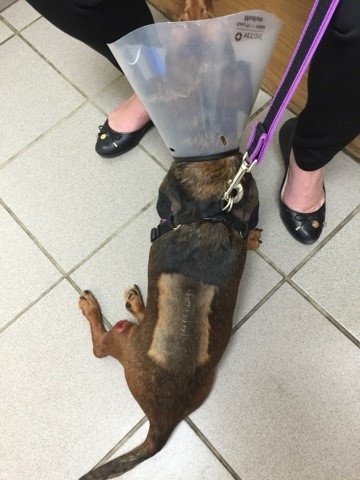
Weasely. Our newest Good Samaritan case.

I am persistently trying to offer assistance and run the fine line between taking care of pets and the staff. If any staff members feel compelled to assist a client and/or a patient they are welcome to donate their time and services. I appreciate the generous compassionate dedication of all of the JVC team but we are consistently helping people who do not pay us back and do so at the expense of us collectively.


Every client needs to be given a daily update of their bill and every hospitalized patient is required to be paid in advance at the beginning of the time of services.

Lastly, no pet will be euthanized or allowed to be privately cremated without the bill being paid. If a bill is not paid, or transferred to me the vet who provided the services will be held responsible for the invoice. (I never ever want this to happen! I will gladly shoulder the responsibility so that no one else has to cover someone else’s bill!!)


For all clients leaving with any outstanding balance a written plan for repayment, a copy of a valid driver’s license and a signed copy of the repayment schedule plan with a witness signature must be done. All paperwork needs to be kept and included in the file or kept by the hospital administrator.

The intention of the policy is to provide assistance to the pets at risk of surrender to shelters due to lack of resources for medical issues, economic euthanasia due to inability to pay up front for needed veterinary care, or abandonment.

In short JVC will offer every single conceivable option to help a pet in need. We will take custody of the pet and find a home after the pet is well and we will never turn our back on a pet. I cannot provide all the care to all of the pets in the world who need us, But I can do so to those pets in our care.

This policy has been in place for almost 5 years. We have done miraculous life saving medicine  and built relationships based on  exactly what vet  med is intended for. If you follow our Facebook page you will see the faces of those we are able to alter the fate of.

Even with this policy I still have clients who want for JVC to pay for their pets care and refuse to sign a payment plan.. I also have clients who ask for us to pay for the care and then want to adopt the pet back. No one ever said it would be easy, but for us  it is the right  thing to do, and I can leave work everyday saying that I  did everything I could for my patients. If they walk into JVC they are my patient and I will never turn and walk away from them.


Related Blogs;

Shelter Medicine Meets Private Practitioner. Finding An Answer with An Agenda.

Dunkin, The Story of The Littlest Life, And  All That Matters.

Open Admission Shelters Are NOT Safe Houses.

Wellness Plans, Savings Plans and Surprises. Why your vet NEEDS to be your best friend.

The Jarrettsville Veterinary Center Price List for 2016.

As always JVC, and I, are here to help you and your pet. If you would like to meet the amazing staff and hear more about the ways that we can help you and your pet live longer happier and healthier lives we would be happy to show you how the face of veterinary medicine and the care we provide can ext end past the traditional options of hope and luck.

If you would like to learn more about pet care or ask a free pet related question please visit Pawbly.com. It is free to use and open to all of those who love pets.

If you want to help others and you have experience with pet care please join us on Pawbly.com. Pet care is about helping others and we are built on this alone. I also have educational videos on YouTube, or @FreePetAdvice.

And of course we hope that you will Please always Be Kind.

Wednesday, October 12, 2016

Has Your Vet Given Up On Your Pet? Or You? Would You Even Recognize It If They Had?


There are patients who make big indelible marks on my heart. One such pup is Myla. She is a sweet, happy, fluff of curls who is always smiling and always inquisitive about every human she meets.  I had seen Myla every week for the first few months of her life with her adoptive family. Those weekly visits were set up to separate all of her vaccines out into small accountable doses. It may seem odd to most, but in cases of super protective adoring parents, and with our very flexible charging and booking system we do things other veterinary clinics wouldn't consider. That puppy vaccine time frame lasted over four months. During which Myla and I became the very best of buddies. I had spent lots of time reassuring her that I was her friend and that the veterinary clinic was a place for snuggles, treats and affection. As always, I wanted Myla to know that we loved her, and that the vaccines, clinic and staff were not things to be afraid of. In fact, my goal is for them to not even ever realize that they are being vaccinated or examined. Building a bond of love and trust during those puppy visits often determines every other subsequent veterinary exam ahead. Making the vet visits enjoyable helps our patients, our pet parents and our staff. It is vital to our mission in assisting our pets live long, happy, and healthy lives.

Myla and I were back together almost 11 months later for a new health issue. Myla was about 20 pounds larger and almost doubled in size. I was excited to see her again and tell her how much I had missed her, but this time she wasn't as happy or outgoing as I had remembered.

Myla at 4 months old.. her last puppy visit with me.
Is a year too long for her to remember me? NO, she is a dog. Dogs are brilliant. She knew who I was but she had come to hate what I represented. She wasn't happy to be at our clinic and she wasn't happy to see me. Although I didn't yet know why?

Myla had been to our office last week for head shaking and a painful ear. As is often the case at a multi doctor practice open 7 days a week 12 hours a day there are times when other vets will see our once-ago puppy patients. The other vet, like all of our vets, is incredibly capable and intelligent, BUT, she didn't know Myla like I did. She had likely seen a long list of previous vet visits, a complete series of vaccines, preventatives, needed puppy diagnostics. The whole enchilada..but, this would not reflect how her original vet felt about her? Had I failed to note how special she was?

When I saw Myla close up and in person in the exam room a few moments later she slowly and shyly approached to say her "hello." The spirit of this spry girl seemed diminished and distant. As I clutched her face to give a nuzzled kiss I noticed that her third eyelids were elevated. This is not normal... she looked drunk and drifted.

Jekyll, my pup, demonstrates an elevated third eyelid..
he is actually trying to sleep and I am pestering him for a photo for this blog..
aah, the plight of being a vets pup.

"What is that about?" My first real acknowledgment to her mom as I pointed to her obviously abnormal eyes.

"The vet wanted me to sedate her for the exam. Last time one pill wasn't enough. So I gave two for this trip." She replied quickly and openly.

"WHAT? WHY?" I couldn't imagine why this girl needed sedation? She was energetic and happy but never bad. What happened?


Her mom went on to tell me that she knew Myla had "a bad ear". The previous vet had "packed it with a long lasting ear product last week and this week was to see if it needed to be done again."

I listened intently to try to make the puzzle pieces fit. How could my firm conception of Myla as a loving, gentle girl have evolved into this? In usual vet med detective mode I asked mom for more information. Myla is after all only a year old. Myla is too young for ear problems that need a muzzle to manage. She is a poodle mix; curly hair and floppy ears. We knew that she is a breed predisposed to ear issues. (See blog on Excessive Ear Hair, and Veterinary Ear Care Basics).
  • What was she doing at home to help the ears not get to this point? 
  • Why would sedation be needed. Never mind "doubling the dose?"
  • When is "packing the ears" a first time treatment choice?
  • What had happened to all of the advice I had given mom at all of those many puppy visits to help keep her predisposition for ear problems at bay?
  • How does a not long ago happy quiet sweet pup become so bad so quick?

Here are the answers to every question I posed above:
  • Home care was not happening. Hence the ear problem becoming a BIG problem needing a vet to manage, repeatedly.
  • If a little drugs don't do the job.. add more drugs. This includes sedation, management at home, and care from the vet. 
  • Packing the ears should not be the first treatment option (in my opinion).
  • The advice I had given those months ago had to be abandoned when Myla refused to allow them.
  • Myla has resorted to being a growling, biting, fighting, squealing,,, now drugged,, dog to avoid her painful ears from being touched. 


Myla has bad ears because her breed predisposed her to them being problematic. The rest was our fault.

Here are the predisposing factors influencing Myla's current ear dilemma;
  • Certainly a discussion of removing excess hair, and keeping her groomed is important. 
  • We also need to discuss how we can try to keep the ears open to the air when they are heavy floppy ears.
  • As with so many ear problems there is often an underlying allergy component. Therefore, keeping Myla on a good parasite (fleas especially) preventative and long term allergy control is all warranted. 
  • We need to understand and accept that her ears are ALWAYS simmering. They are ALWAYS waiting for that low boil of inflammation to become full blown infection. Thwarting the simmer before it turns into infection is vital or somewhere down the line she will need a TECA. She will lose her ear canals because they have become too damaged and a source of chronic pain and infection to treat any other way.
  • We need to be diligent in monitoring and treating them, even if that is daily. 
  • We also have to find a way to let Myla know that we love her and she can trust us.
  • Myla needs to believe that we are here to help, NOT HURT. That goes for inside her home and inside our clinic.

Here's what Mylas's mom was doing at home. She had started to clean the ears as we had recommended (see video here), BUT, Myla's ears hurt and therefore Myla wouldn't allow any kind of restraint. Myla associated anything to do with restraint or touching her ears with pain. She was now afraid of the pain that she believed was going to happen. Subsequently Myla's mom started to try to clean and medicate with soaked cotton balls, paper towels, Q-Tips and minimal to no restraint. The problem is that these don't work because her problem is deep within her ears and she needs a thorough washing/flushing. These short cut methods are the consequence left to owners because they cannot restrain. Worse yet, they DON'T allow the ears to be treated and therefore the snowball of ear problems perpetuate and of course, worsen. Pet parents are left feeling disgusted and that they cannot help their pet or assuage the vet. If left unchecked pet parents will often have to choose between what they think is just hurting their pet, or, doing what the vet says. Most pet parents will pick the side of protecting their pet from abuse at their own hands. They will either find another vet, or stop coming back to us. If they do come back to the clinic the vets are then forced to try to manage an unruly scared and desperate patient and left to do things like man-handle, muzzle, and/or drug. Even worse than these scenarios are the pet parents who take our "bad pet management" techniques as gospel and begin to emulate our own treatment of their dog. I have pet parents who return with a more fearful pet because they are FORCING their pet into compliance with more brute force, chains, muzzles, beatings, verbal chastising and utter determination to force submission of the pet into compliance. So now the pet is BOTH painful and bullied. These pets either have their spirit broken OR they fight back. These are the pets who are surrendered or euthanized somewhere down the road.That is the ultimate devastation of BOTH the vets and parents relationship.

Myla at her follow up appointment.
I am delighted to see a smile again.
Your pets ear canals are long tunnels that are "L" shaped. When there is infection or inflammation the tunnels get red, hot, painful and angry. They respond by swelling. This causes narrowing. A narrowed ear canal cannot breathe and it perpetuates and promotes more infection, pain, and irritation. You cannot open up this narrow tube without liquid.. lots of veterinary prescription liquid. Your pet needs medicine in that tiny painful hole that used to be a healthy open ear. The longer you wait and the worse you fail at delivering medicine where it needs to be, AND, the less likely that ear is to ever go back to healthy. Over time the ear closes. Literally swells and closes the infection, the pain and the disease inside. Your pets only options at this point is usually removing the diseased, scarred, non-functional ear canal. I know it sounds awful but these pets are in pain and they will be happier without the smelly infected very painful ear. They already can't hear out of it. You aren't losing function you are simply bidding disease adieu, finally.

It was time to have a sit down talk with Myla's mom. As I talked with Myla's mom and asked for help the technicians all forewarned me that "Myla was terrible last week." Well, of course she was. She is afraid, in pain, and we muzzle her, and then pile people on top of her.

Myla's mom loves her. She, like so many of us, doesn't want to hurt her. In truth all of us have failed her. Failing to address pain and failing to recognize it as the basis for her unruly behavior is inexcusable. Further the sedation we had given was not to provide pain relief, it was just to slow down her responses to it. We can do better.


Admission of a problem. 
  1. Myla has bad ears. Her breed predisposed her to this.
  2. Myla's ears hurt. Pain is treatable.
  3. Myla won't let anyone touch them. She has to learn to trust again.
  4. Myla is too young for any of these. Drugs to induce compliance are cheating her and her family of an adequate plan.
  5. The staff all knew who she was and all were willing to treat her as if she is Hannibal Lechter. 

Daily Checklist For Myla;
Myla's list of daily care now includes food, water, shelter, love, urinating, defecating, and ears. Every day I want her mom to make sure these are all in good working order. To avoid the narrowed, red, painful ears she has now we need to start treating for the pain AND disease AND then start a long term maintenance that her mom can actually do. For me this usually includes advising the ears to be washed as often as needed. Use your nose, eyes, and ears to assess the ears at home. 

Here is where we are going to refocus our efforts so that at the next vet visit, at the next health care need, and every step in the public everyone is safe and healthy.
  1. Pay attention to any condition appearing in such young dogs. These are the patients who need extra time and attention. They are the life long cases. Educate your clients so they can manage their pets optimally through the decades ahead.
  2. Mom needs to go back to basic obedience class and learn trust and basic commands. Both mom and dad need to attend. Obedience/Puppy classes are primarily to train parents how to communicate effectively with their pets. Not having both parents present is imperative to Myla getting clear, direct requests spoken (calmly and gently) in one easily understandable language.
  3. Mom needs some help from us on how to be able to hold Myla (this is ALWAYS the problem with bad ears long term). Myla was too wiggly and her mom couldn't restrain her. So the daily washing (see video on how to do this here) turned into soaking a cotton ball and trying to get that in the ear.
  4. Myla needs a team who is devoted to helping her mind, body, and soul.
Myla's follow up ear appointment with me.
She is her old happy self.
Sedation free and happy to take treats.
She trusts me again.

The point to all of these is that we have all failed her. We turned her in to this "BAD" dog. How did it happen? We forgot to train her to trust. We allowed her to voice an opinion that was detrimental to her health, and we forgot that parenting is the responsibility of the village. 

Myla will come back every week. In some cases it will just to sit in the reception area and make friends. In others we will gradually start to condition  her to accept restraint. In others we will begin to clean her ears. The goal is to condition and desensitize her fearful response to the clinic, restraint, and managing her ears. We are also going to be kind, patient and understanding. Using a drug or muzzle is too often a way to say that we are going to "just get through the exam and get what we can done." It is a terrible way to treat a chronic problem and it will make every subsequent visit that much worse. No vet wants this for their patients.

This is how I want my patients to be; calm, relaxed, smiling, anxiety-free.
If your appointment doesn't look like this ask your vet for help and guidance.
No one wants to be hated or afraid.

If you have a pet who is "required to be drugged," muzzled at the door, or has orange stickers all over their file that reads "CAUTION", please talk to your veterinary team about how to help your pet deal with their own anxiety, and how you can become the welcomed anticipated client not seen or treated like the skull capped grill faced killer craving fava beans.

End of her follow up appointment! Everyone feels better!
Myla returned a week later a different (or should I say the same) dog then she was at the last weeks visit. Her parents are dedicated to keeping her healthy and happy and are making great strides to helping her ears feel and be better. They are working with her anxiety, her fears, and we have almost completely eradicated the pain and infection. I left an open invitation to come back as much as they want to. I am happy to help take baby steps forward so that she is never stressed or not receiving the emotional AND medical care she needs and deserves.

Love you Myla!

Related blogs here;
Everyone Has Ears And No One Treats 'Em Right.

Ear Hematoma Primer

Ear Cleaning Guidelines.

Thursday, September 1, 2016

It isn't just high school anymore. Veterinarian Bullying and Veterinarian Suicide. How the vet clinic is the new homeroom.

There are a few key concepts to pet care that vets just intuitively get. Something about our ability to provide empathy, our understanding of biology, psychology, and determination of sheer will in the face of adversity. It is why we know to not give up on a sick kitten, parvo puppy, or judge a short coated wide nosed bully breed as automatically being guilty of the label "dangerous." We can sniff out disease, diagnose via one sentence in a chart without ever seeing the pet, and make spot-on assessments in whip cracking time. We are an intuitive deeply sensitive organic bunch.

Aurora
Many of us chose medicine because we like a challenge.  A list of incomplete clues and playing detective. We also like gambling on gut feelings... we all do it. It is the fun of having little access to all the big expensive diagnostic tools that give you neatly packaged answers and remind you to always be humble. We also chose to study and practice this craft for the benefit of pets as the cuter cuddlier alternative to the humans we would rather avoid.

For too many vets the situation is this; One on one, vet to patient, we are incredibly adept and skilled... BUT, one on one vet to client, OR, vet to superior vet, we are falling apart. We are unable to voice concerns, stand up for ourselves, our patients, our integrity, our self respect, our emotional well-being, or the others around us as they are being bullied. We are victims of abuse in our own places of work and we don't provide ourselves a short term, long term, or even a differential plan to improve it. We are abysmal doctors in caring for our own disease.

Some of us live daily in a quiet self-imposed crippling torture. Some of us are leaders like practice owners, relief vets, self-employed, or practicing and living based on our own needs and desires. It is often the simple fact of the "haves" and the "have-nots" and the delicate piece of earth that remains in between. Status, titles, empowerment, entitlement, whatever the case, the "haves" decide and the "have-nots" put up with it. Many are associates living by a play book someone else directs and dictates. I have become increasingly aware of this group through my blog and a few secret Facebook groups dedicated to providing support and a safety net to those of us who are in danger or intimately aware at how high the suicide rate in our profession is. It is heart breaking to hear how many people feel trapped and desperately unhappy.  As this profession shifts hands to the next generation of intelligent compassionate women it seems to have also shifted into treacherous waters full of mental anguish. Veterinary medicine is replete with emotionally embroiled overabundance. The problem seems to be where to manage the excess when you have learned helplessness.

Peanut
I usually try to not alienate anyone by providing generalizations, BUT, this is a plea for those who need it to get their own SELF HELP so I am going to be as direct as possible.

Why do vets allow themselves to be bullied? Studies show it is that they feel one of the following;


TRAPPED. People will die internally, or kill themselves if they feel trapped. Chew your paw off to get out of a leg hold trap. Put a bird, gorilla, elephant, whale in a cage too small, deny them love, stimuli and a healthy happy environment and they will unravel. We have all seen it. We recognize it, we diagnose it, and now we need to start treating it. We need to do this reflectively. We are no different than the dogs, cats, and caged beasts our clients have inadvertently messed up to the point of needing professional intervention.

CONFLICTED. We are asked, expected, or ordered to do things we do not agree with. Add a pathetic patient whose fate literally lies in our hands into the mix = recipe for disaster, lying, self loathing, and emotional heartbreak.

EXHAUSTED. We have this ludicrous idea and expectation that your self worth is directly proportional to your self destructive obsessive compulsive work ethic that denies and promotes not eating, not sleeping and not using the bathroom. In less civilized times it was termed "slavery." Except now it is viewed as "self-imposed and expected." Perversely it is rewarded to work to past the point of exhaustion. Who wants an exhausted doctor?

FINANCIALLY BOUND. OK, we are in debt up to our eyes. Some are drowning. Naive, blindingly stupid, immature debt because we absolutely had to go to vet school. (Starting to see a pattern of self-perpetuating stubborn behavior here?).

Beckett

The "haves" hold this false counterproductive belief that if you work or reside in a profession built on a pyramid of power the minions at the bottom need a reason to stay complaint and stay quiet. The history of dynasties is built on this premise. You either "have" or you are a "have-not". High school meets real-life and still the same drama persists.

Women out there who are unhappy I offer this advice;

Try to understand what the most basic source of your discontent is.

  • Is it finances? Is it due to debt? If so is digging deeper, working harder, and sacrificing the balance that keeps you able to work in a healthy manner worth it? If you feel tied to a bottom line you will inevitably make poor decisions and perhaps even cost your patients the options that might cost them their lives. I know of associates who are requested to maintain an average client transaction that starts at a number. Client options therefore include those above the ACT or euthanasia. It is both criminal and unethical. There are "embedded costs" in services that inflate the basic service fee. Does an x-ray include a mandatory radiologists review? Why? You will in many cases be paying for something added that you don't need. You are financially bound.
  • Is it a boss or co-worker who makes your life hell? Do you take it? Do you ever ask yourself if you have to? If you want to? Or if the consequences are worth the courage it takes to stand up and demand something different? I will be the first to admit that I live on the other side. On the side that makes me incapable of being civil at times. In the face of cruelty, neglect and bullying I am quick to drop an F-bomb, and I am not picky about who I drop them around. I am that cat in the cage who always chooses to hiss, claw, and fight. It is as basic and primal as the feral cats response to fear of being eaten. I realize there are Cocker Spaniels out there. Everyone loves a Cocker Spaniel. We vets expect that their lowered ears and cowering submissive tail wag all say "Please go away, I am too afraid.. But I am paralyzed to do anything about it." "Oops, I think I just piddled on the floor...." You are exhausted and trapped. We know that some dogs will resort to biting via deeply seated redirected aggression, or a submissive dog pees. Cats, well, we all know they are smarter. They haul ass for a new home, or claw your eyes out. Be the cat.
  • Is it emotional disconnect from who you thought you were? The healer you wanted to be and the vehicle of lack of options that you have become? I would argue that this is a myth. I am living proof. I can't explain to you exactly how it happened, but at some point I decided I was going to live by and be true to the core of who I am. I save from suffering, I protect and provide happy healthy lives. I most importantly refuse to believe or accept the commonly broadcast brainwashing bullshit that "we can't save them all." We can, we merely decide to not be the one who plays God, determines life or death short of death shrouding above our patients. We ease suffering and we don't speculate for an easy convenient death. Yield your pink sword for only the battles already lost, not those being fought. You are conflicted.

Donatella and Raphael
I did some research on bullying on the adult level. I was particularly interested in this at the level of the military's response to intimidation tactics shown to subordinates. I think it is relevant for a few key reasons;
  1. Most vets work under another vet by reason of rank, length of employment, or experience.
  2. Most have binding contracts that dictate terms and conditions that must be met to insure continuance of said employment.
  3. Most vets are in debt and need to maintain continued employment to break even. Getting ahead is a dream way down the road.
  4. Most vets have learned, or been instructed to, keep their mouth shut in the face of adversity or confrontation. I know lots of vets who are instructed to stay in the exam room repeating treatment options and allow verbal abuse from the emotionally AND financially strapped client to get a treatment plan estimate signed and deposit placed.
  5. Most vets avoid job searching like it is water boarding. We loathe the hunt for a new home.
  6. Most vets cannot, yes, simply cannot, muster the little voice buried deep down that allows them to stand up for themselves. Ever. We are taught to take it. We take it to get into vet school, we take it once we get into vet school, and we keep on taking it. You practice what you are taught.
  7. Most rationalize the bullying. They learn when to avoid the bully, what the triggers are, and rationalize that they can minimize the hurtful altercations if they only can do..... The maneuvering to avoid the tickling down of nastiness is a dance that wastes your time and diminishes your ability to do your job of helping your patients.
  8. The options out are either insurmountable, inaccessible, or unfathomable. So people stay trapped.
How does the military address bullying? It provides outside resources. Is honest in its advice to not seek help within the team and add further dissension, and it reminds us that managements assistance in providing a safe workplace is critical. But what happens if management is the bully? And what happens if you, as next in command, are expected to both take the crap coming downhill, and figure out how to live by example, maintain your own code of ethics and want to protect those beneath you?

The military resemblance is solid.. So lets move onto a topic we all can relate to; dog training and behavior issues.

I found these 4 week old kittens on one early morning run in a tire on the side of the road.
In 1 day they transformed into marshmallow-love-muffins.

If we are so adept at identifying the source of the problem and making a diagnosis without most of the fancy expensive human medicine equivalents at our disposal then why is it that we can't fix our own problems? Why don't the skills and lessons we have already learned and mastered translate into the veterinary office bullying dynamics? Why aren't we rewarding only the good and ignoring the bad? Wouldn't things change if you just shut off your ears and walked away every time the boss started barking, growling, hissing or trying to spray/pee on you to mark their territory?

We know better, but we can't ask for, or demand, or even role model better? Reward the good. Smile and say "thanks" when you do something amazing. Miracles happen everyday in practice. Give yourself a gold star! Post on social media your favorite feel good moments. Empower and recognize yourself daily.

Remember that there are people who work for you so lead by example. We are all conditioning each other to act appropriately. Keep training your staff. Teach them new things, share the wealth of your experience and expertise. We all need and deserve praise, empowerment, a shoulder to lean on and a trusted co-worker as much as you do. It isn't about picking sides and building a team against your boss it is being the shining example of how to raise a healthy human in a dysfunctional family. This is every behavior puppy exam we see. We know how to do this. Train the parent to see the world through the pets eyes to enrich the bond and avoid the biting behavior case down the road. We do not condone yelling, punishing, hitting or being harsh to a puppy, or anyone in our care. EVER. 

Try to see yourself as the person you want to be? How can you get there? Is behavior modification needed? Do you need a trainer, mentor, or secret Facebook friend/group to help you muster the courage to keep yourself alive?

River
Staying in a toxic environment is detrimental to your quality of life. How many times a day do we discuss "assessing quality of life" with our clients? How many pennies are in your "bad day" jar? Choosing to stay is a behavioral learned condition. "How do I train my cat to go back to using the litter box?" To which we reply back, "We always treat the medical condition first, and then begin behavior modification training." If you are not feeling well please ask your doctor for help.

We are acutely skilled at understanding and categorizing the behaviors and responses our patients display. We assess and prescribe our reactive behaviors and treatments to these. Are you the "get out the drugs" when the frightened cat starts fighting back, girl? Or, do you act like the Cocker Spaniel with paralyzing fear and either ignore or be calmer/more gentle? We empathize with our patients and adapt accordingly. If your boss is using a newspaper to emotionally swat you into submission, rubbing your nose in your own excrement, bullying/intimidating you, or in any way making you feel anything other than valued, my best honest advice is to salvage yourself, guard your own self esteem, and walk. It is not lonelier, scarier, or worse on the other side of a hard decision. There is nothing more important to you than your life.. your own destiny in your hands. You made it through vet school. Most of us thought  that was almost impossible. It wasn't, you did it. You walked in, and you walked out, and the rest of your life is yours. Never surrender that. It is yours.

Gus-Gus,,
found in a dumpster emaciated, tail tip deglove, parasites-galore!

A very good friend and associate described her struggles with her emotional well-being in her previous practices as this: "I knew I was in need of help. I called the State Board and was told they couldn't do anything. I called a lawyer to ask for help with my abusive boss. She told me "it sounded awful and that she was sure she could assist and then asked me if I had $400 per hour to pay for her help?" I didn't know where to go. So I moved from one bad practice to another." Sounds like so many of us who get stuck in bad relationships, doesn't it?

There is this huge move in veterinary medicine to provide a Fear-Free (trademarked) practice. Essentially it is a certification to train the staff to provide fear free care, handling and services to the patients who are under our care. Why isn't this being taught to the staff and superiors at the clinic? Perhaps Fear-Free needs to start at the top and trickle all the way down?

Maybe its time to address our own health with our own advice?


Pray what you preach. Learn how to incorporate a healthy workplace into your life and as an extension of it. If you can't muster that voice follow your advice and decide your own destiny.

Here are some of my favorite training tips; How many could you incorporate in your life to improve it?

1. Get outside. Everything is better under a tree, in the grass, or bathed in sunshine.

2. Find something to hug. The toughest days are always easier to tackle with a kitten hug or a beagle kiss.

3. Remind yourself whose life you made better today. (PS the number of legs they walk on is not important).

4. You are a caretaker. Take care of yourself. Happy people have happy pets.

5. Dig deep until you find that treasure. Be the JRT! Work passionately and let your passion provide the answers to the tough questions.

6. Never surrender the bone. Hold onto to your soul and don't let anyone take it.

7. Retractable leashes are dangerous and self-deprecating. Walk side by side enjoying each others company, or go leash free and let the adventures of the unknown be your guide.

8. Reward a good day with a healthy snack and a long rest. Dx yourself with bilious vomiting syndrome,, have a snack before bed!

9. Collars, like monogrammed white coats, can be resized, redesigned and replaced. No one owns you.

10. Cancer, disease, and death are far more likely if you don't care for the whole package. Protect your life and be the  best friend to your best friends by taking care of yourself for the long haul. We know how to tell our clients how to do this. It is never easy to implement a change for long term benefit but that is not an excuse to not try.. you made it through vet school after all. You can do anything!

Chance

Walk into every situation, every patient and every dilemma with the attitude of "what can I do to help?" If the answer is "get the hell out!" listen. You are an amazing healer with an adept skill set even without all of the fancy expensive diagnostics to back your diagnosis up.

If I can help please find me on Facebook, at this blog, or at my vet clinic, all are listed at the end. I will really try to not sound like a Drill Sargent and I really will be on your side, no judgement, no harassment, no consequences, just love, support and encouragement on your terms.. no one is trapped.

Resources for vets;
AVMA Wellness and Peer Assistance support.

List of compassion fatigue resources via Jessica Dolce blog.

Compassion Fatigue blog. Krista Magnifico, DVM

About me;
Still wandering around in rose colored glasses. Still loving being a vet. Still filling my cup at every chance I take. And, still trying to save the world one wet nose at a time. I started Pawbly.com as a way to help provide a safety net to those in need and those who can provide help. It is a free to use site intent on inspiring and empowering. Please join us in saving the pets of the world.

I am a small animal vet in northern Maryland. Jarrettsville Vet is in Harford County MD. A busy 7 day a week, 6 DVM practice where care is never denied and happy endings are always on the To-Do list.

I am also on Twitter @FreePetAdvice, Facebook, YouTube and in the yard/couch with my own four legged kids. If you need me, or you need help you can leave me a phone call, comment, or email. I will help in whatever way I can. 

Thursday, August 18, 2016

What Compels Vets to Forgive? Response to the veterinarians open letter to the vet who killed the cat with an arrow.

I recently read a published open letter from concerned veterinarians worldwide to Dr. Kristen Lindsey. Dr. Lindsay is the vet who killed a cat with an arrow and then posted it proudly on Facebook. She is likely to lose her license and has been the subject of an intense social media backlash. I have already written about this (here) and still feel as sad and angered as I did when it first happened.


A group of vets around the world wrote an open letter to her offering "support and an empathetic ear."  It was published without names to protect anonymity, but I am finding providing forgiveness  for this action a very difficult thing to do.

Clearly my biggest dilemma in life is this unyielding passion I have for animals. It is what compelled me to put up with the grueling list of "required items" to get into AND out of vet school. The degree of personal (and for many financial) sacrifice is what makes the career path both revered and sought after. It is earned. No one would argue otherwise. 

For me, personally, it is why I struggle within my day to day vet life. For every empathetic client who apologizes to me as I euthanize their very sick and suffering pet, I want to say, "Oh, God, this is not the worst part. The worst part is all of the other cases abandoned from assistance due to lack of resources, compassion and options. That's the shit that kills me everyday. Treatable meets unattainable because some human decided to give up than,,, well all of the reasons we get barraged with. People either don't care or can't afford to care. These are the pets that nibble away at my heart. To see a veterinarian so blatantly and callously NOT care about a cat, someone's pet who very likely might have, could have, or would have, been one of her patients, well, that's appalling and disturbing. How can she be a small animal vet and kill a cat like this? And then be so stupid and lacking of remorse to post it? There is not a viable excuse or reason? And now we, the collective group of vets already dealing with stress, anger, debt, suicide, and unresolvable emtional baggage are supposed to say "we care about you anyway?" It tells the world of loving pet parents that we are empathetic to her? For the record I am NOT empathetic to her. I think she needs professional psychological help and to lose her license but not empathy.

When I can take a breath and step back I start to think that maybe it is not lack of empathy but the world of greed, anger and caring that is the disconnect? Maybe if we could all care MORE we could make all of this better? Is that the intent of the letter? But, damn it that big-hearted-rose-colored glass-wearing 6 year old kid inside of me who refuses to let go of the dream of "someday being a vet so that I can save everything,' is still inside me. It makes me crazy with having to protect her from the sad reality of the world we live in. Everyone seems intent on killing everyone and everything else. How do you explain that a  6 year old? How do I tell the 6 year old who someday wants to be a vet that there are some bad people in the world? What do I say to her? To be kind, to be forgiving and to try to always see the good in others? 

Where is the problem of disconnect between vets and the public?
Here are some of the most common reasons I hear on the pet message boards;
1. More concerned about money than the pet. 
2. Inaccessible by either time, price, or indifference.
3. We lack compassion.
4. We are too expensive.
5. They don't trust us.

And I have to admit I do see all of these as being problems within our profession.

But, aren't we a part of the problem? Could we possibly be? Is this letter of open arms and acceptance to an individual who clearly lacks the moral and ethical fiber to stand amongst us not still a reason to forgive but not accept? DO we have to do both to be sincere with either?

I can only speak personally of course. I can tell you that we vets kill (yes, it is kill "to end a life" packaged pretty in a more palatable term "euthanasia") have gotten so comfortable with ending a life that we now have difficulty drawing lines to where "acceptable" meets "unacceptable". I spent about 30 minutes on a vet forum centered around trying to offer help to the staggering number of vets among us at risk for suicide, and still scattered amongst the many pleas for support through rough days, mean clients, rotten practice owners, and cases gone wrong their were members advocating euthanasia for behavior cases (who inevitably were the result of some human hand) because "there are lots of 'nice' dogs being killed already." I was struck by how easily we all have to justify actions that people are struggling with. And we wonder why we are all tired and suicidal?

Would everything be easier if we all just forgave each other? Would the inner turmoil so many of us have about so many difficult aspects of this profession get better? Or should we all take a long look in the mirror and ask ourselves if there is any reasonable expectation to be good an kind to each other and hold a moral compass high? There is a pervasive over arching anger problem among us, but at least we care to challenge each other to invest more of ourselves instead of becoming so hardened by the indifference we loose ourselves in the process. It is a matter of getting out alive, but surrendering your compassion along the way might just be as bad.

Can I forgive Kristen Lindsay? Yes. Just like I have to do with so many of the day to day travesties that walk into the clinic. Do I have to publicly profess that I hope she finds peace with herself and her actions? No. I am not that strong, and I am ashamed of her, the excuses, and the acceptance of caring so little. Perhaps that is the thread that still holds my faith in humankind?

Here is the letter to Kristen Lindsay, as it was published:

"Aug 11, 2016
By dvm360.com staff
DVM360 MAGAZINE
Editor's note: The following letter was a collective effort from veterinarians via Facebook to send a message to Kristen Lindsey, DVM, the Texas veterinarian infamous for shooting a cat with a bow and arrow. Lindsey filed a motion for a partial new trial that was recently denied.

Also, a number of veterinarians originally signed this letter with their full names; however, after they received backlash on social media that included death threats, the editors and authors together decided to use initials for all signatories out of concern for personal safety.

Dear Dr. Kristen Lindsey,

The most important trait of any veterinarian is compassion, and we extend our compassion to you. As much as we find your behavior unacceptable for a professional in our field, we can still support you as a person.

As veterinarians, we consider life sacred and suffering abhorrent, including yours. Our profession is already fighting to maintain integrity in the public’s eye, and the veterinary community is now wrestling with the ethical issues—and clients’ subsequent reactions—raised by one of “us” being proud of killing a cat using a method not listed in the AVMA guidelines. Indeed, many supporters of this letter wish to remain anonymous so that they are not associated with these practices. Still, there are larger issues which we hope to address with you in this writing.

Our profession’s suicide and mental illness rates rank among the highest in the United States, and even the world. The fact that public shaming, like that aimed to you, can have serious effects on a person's mental and emotional stability has not escaped our notice, especially given the all too recent links shown between bullying (cyberbullying and other forms) and the preventable loss of our colleagues. Because of this we are concerned for your well-being, and urge you to seek help as necessary. While we cannot speak for you in any legal matter or otherwise—even if that means the veterinary profession may not be in your future—we hope that you find the support you need to emerge from this as a wiser, stronger and more effective member of the community.

You matter. We are here for you should you need a supportive or empathetic ear.

Signed:

Drs. MMK, DD, LB, JM, EA, DLB, CD, SS, AMvH, MK, MSH, RH, EKB, EE, EA, JGNM, LW, LS, BE, RS, CGN, KF, LPO, CR, NL, CR, LCH, SH, MEB, LTG, EA, RV, KWW, AW, DA, JLP, MML, HL, JP, BRP, JS, MvCP, LN, KS, KC, SA, CG, JH, JG, MS, BB, AG, JS, VH, LS, AHW, PG, CS, TKSR, JE, LP, CR, TKK, EKB, MD, JM, AH, NS, LE, ZJ, JT, CMC, MD, KN, MEG, VMG, KAP, KHP, MED, TMD, JMM, CLS, JCK, KPR, MYR, RAV, RO, KK, LAB, MSR, AIN"

There is cruelty, neglect, pain, and suffering in every corner of life. For Cecil the Lion, the trophy hunting Trump kids, factory farming, feral cats left to repopulate without restriction who are not given medical care when URI hits to leave them victim to be eaten by predators, dogs surrendered by their owner who was too whatever to try another option and are actually told the dog will be killed, and the people who abandon anything I am not sure I want you to know that I am empathetic? Does it add a burden to my already heavy heart? Yes. But I am still here NOT euthanizing healthy treatable animals, still offering every single imaginable option to a person who is in need, and still not surrendering my soul to the excuses that make it easier to be paid to kill, give up, walk away, ignore, disconnect, etc..

This letter needs to be sent to the masses of us. All of us, vets, clients, staff. All. We all need empathy and acceptance. Instead we cling to the opposing conflicting laws of pets are property, herd medicine and its ag-gag laws, over inflated costs of care, and worst ROI of any profession, and for profit vet schools. It's ours to own. Forgiving each other when the shit storm takes possession is a nice start. But now it is time for accepting that we aren't the humble agriculturally rooted members of our community who helped everyone because we were happy and privileged to be in the position  to be blessed and empowered to do so. We like white coats and exceeding the avg client transaction quotas too much.

We have lost our integrity because we make excuses to justify giving it away. We do care but we gave up fighting for it so now we are trapped, alone, afraid and excusing the suffering by ending it. Just what we were all trained to do.

There isn't one member of this profession  that doesn't have bad days, make mistakes and get caught in between a rock and a hard place for your conscious to try to navigate out of. BUT a public display of a lack of moral integrity, compassion and cruelty is not where my empathetic ear is going to be offered. There are "too many nice people out there" who need it first.

About me. Typically I put links to my other social media accounts and activities. For todays raw post I will only add that I struggle with how to be a better member of the pet loving community I serve. I never wanted to be anything  other than the person  I am, and I understand that the world looks different from others perspective. I also understand that posting anything personal leaves me subject to opinion and  backlash. BUT if  I write it, post it, and publish it I own it and stand by it. I don't believe in anonymity. If you want to help other pets find your calling and feed your compassionate heart on Pawbly.com.

Monday, August 8, 2016

IVDD. The days immediately following the diagnosis. Recovery, post-op problems and how to conquer them all.


Without a doubt the fear, apprehension and sense of dismay is thick and overwhelming for most clients dealing with IVDD (intervertebral disc disease). It is persistent and pervasive at the time of diagnosis and for the first days to weeks of recovery, regardless of whether the patient is recovering post-op or with conservative care. With each case there are always many questions, with many remaining unanswered left to the decision of time, circumstance, and luck. It is the equivalent of sudden decisions, life changing odds and prognoses, and fate in some unnamed higher power's hands who refuses to show their face to claim responsibility. 

For these cases I try to reiterate and reinforce a few simple things;

1. Be Strong. Even if you don't know what to do or which end is up. Just stand, breathe, and believe you and your dog can get through this. We have wonderful tools to help heal, but giving up defeats them all.

2. Listen to your pet. They will look at you for help. They will wag. They will try. Take heed in them. They always decide, and they rarely give up. 

3. The first 48 hours are hard. The first week challenging. But if you can get through the first week and if things have gotten easier with encouraging signs of interest in food, better understanding of bathroom needs, a routine with a friend who needs a little more TLC, then you can get through this. 

4. Lean on someone as much as you feel you need to. Ideally this is your vet, your neurologist, your vets staff, your friend and fellow pet lover, or even those of us at Pawbly.com. Ask lots of questions. 

Don't leave the vets office until you have been taught and are comfortable with the following;


1. How to pick up safely. I like one hand on the sternum and the other behind the back legs supporting the pelvis. Hold on don't squeeze and don't let a nervous pet make you nervous. If you are worried about wiggly use a towel to wrap like a burrito and be safe.

2. Know how to check for a full bladder. Learn how to palpate, express and monitor. Yes, it takes practice, and yes! you can do it. (I promise, you can).

3. Learn how to monitor defecation, and keep it soft so it can pass easily. Every client gets worked up about lack of poop. I am usually not too worried. Even after 3 or 4 days. If your dog has a disc protrusion/extrusion they have a very painful time even sitting. They usually aren't eating for a few days. If your pet isn't eating there won't be feces for days. Also, posturing to defecate is painful. They either won't try, or they can't push the feces out. Every IVDD dog is placed on wet food and given an oral laxative to keep the feces from becoming dried and impacted in the colon. Use the wet food and laxative to desired effect. The dose is never set in stone, it is used when, if and as much as needed.

4. Learn how to safely use a sling. I want you to keep encouraging and challenging your dog to be a dog. Walk, pee and poop. That's dog basics. Use a sling, place their feet correctly and encourage them to support their weight. As the foot righting improves encourage walking. Physical therapy is 10% putting them in the right spot (I like outside in the cut grass for footing and softness if there is a spill) and 90% giving them the opportunity to go back to the life they remember.

5. Obstacles happen. Don't get discouraged, stay active and have faith. Sometimes medicine comes down to faith, and it is always the better for it.

6. Cage rest is imperative. Not encouraged, but rather, required. If  your pet is not used to being in a cage it is often very difficult to keep them calm. Calmness, quiet, rest and rebuilding of the broken damaged tissue is what is needed. How can you discourage movement if you cannot cage them? I will warn you that they will move faster, try to do more, push themselves to doing what they did before, and if allowed to make decisions, they will make bad ones. Keep them caged and know it is for the health, well-being, and sanctity of having a rest of their lives.


This is Wrangler. His stumble in the recovery process was licking his left knee to the point of an open wound. In spite of his e-collar he was wiggling his nose to the point of his knee and licking obsessively.

Now I firmly believe that our pets are always trying to tell us something. Wrangler was telling me that there was a problem ad he was trying to point me in the direction of it. Wrangler was leaking urine. He knew he was leaking and no one likes dripping pee. 


He needed some laser therapy for his knee, another e-collar, and a medicated ointment for his prepuce. We also instructed his family to palpate the bladder with each trip outside. First to get a urine stream going, and second to try to make sure he was emptying his bladder completely. Residual urine in the bladder turns into a possible pool for infection. An overly full bladder will leak.


Double e-collar anyone? If we can't make Wranglers nose shorter we have to make the e-collar longer.


Laser therapy had the lick granuloma cleared up in less than 3 days.


A drying healing knee. 


IVDD is the one disease that comes on like a freight train and sinks a  pet parent to their knees. It is frustrating, painful, and often seems overwhelming to parents. Have faith, be calm, be patient and don't give up early on. It is a disease your dog can conquer, even if you cannot afford the neurologist, the MRI, or the surgery.

I always try to add associated costs of care with my blogs. All estimates are in USD for East Coast USA
Here is the break down;

Conservative care; Non-surgical medical treatment. Cage rest.

  • initial exam to get a presumptive diagnosis. $40-$80. These cases are usually able to be diagnosed on the first visit and do not require advanced diagnostics like an MRI. They have a high incidence of suspicion that is usually accurate at presentation.
  • x-ray $100-$200. Should be done at initial visit if the vet suspects IVDD.
  • analgesics $50-$150. Includes NSAID or steroid, opioid patch, oral opioid. Do NOT decline these. Your dog needs them. There are lots of cost effective options (like a steroid at Wal-Mart is less than $10. Call me I will loan it to you. If you decline it is simply because you are an awful person.
  • Elizabethan collar $20-$40. They can be made. Ask the vet for an old xray film to make your own.
  • Sling, free, use an old shopping bag with the sides cut out, or use a towel. 
  • Cage; borrow from a friend if you don't have one.
  • Many places will recommend blood work. If you are tight on funds skip it. It is not going to make your diagnosis and it may not help with the treatment plan. It can be done later.
  • Follow up care. Ask how your vet charges for rechecks, phone calls, and emergency care. Expect to see the vet about 3-5 times in the first week or two.
Gold Standard care. No expense is too great, or, I have great pet insurance;
  • Includes referral to an emergency care facility for the first 24-48 hours. Usually $500-$2000 and for all of the items listed above.
  • Referral to a neurologist for MRI and surgery. $3000 to $9000.
  • After care at a facility to help recovery. May be 3-5 days $2000-$3000.
Personal Note; Nothing disturbs me more than a client being directed down a path they cannot afford to be on. If you cannot afford the decompression surgery and follow up care with a neurologist it is difficult for me to advise that you have an MRI done, UNLESS it is to rule out an untreatable life threatening condition like a tumor, blood clot, etc. If the vet or neurologist thinks it is a disc AND you know you cannot afford surgery DO NOT FEEL PRESSURED TO continue diagnostics. Elect cage rest (be compliant and follow up with your vet) and don't feel bad. Whatever you do, don't feel so bad that you give up and elect euthanasia.

For more information on this disease please see these related blogs;


If you have a pet in need you can find a community of helpful people at Pawbly.com. Pawbly is free to use and open to anyone who loves their pet and wants to help them.

I am also available for personal consults at Jarrettsville Veterinary Center in Jarrettsville Maryland. Or find me on YouTube or Twitter @FreePetAdvice.

Sunday, August 7, 2016

Re-Post Of Compassion Fatigue blog.

In light of the publishing of NPR's article on compassion fatigue, I thought I would re-post the original, unedited blog written almost 3 years ago. It was one of the few blogs that came to me in a downpour of words compelled to put to paper. Written in an hour it is one of the most honest genuine pieces I have ever produced (next to those on Savannah).
I can say things have gotten better. I know who I am and who I protect her inside. I accept the struggle and forgive more readily. I let go from the things I cannot change more easily and I listen to the voice that reminds me that giving is a gift, not a burden. I am less afraid and more empowered. I embrace the challenges instead of wishing it could be easier. I smile, hug my pets and am thankful for the good friends in my life.. I try to chose to cherish instead of grieve.  
To those struggling you are never alone. 

Compassion Fatigue. When the candle you are burning at both ends consumes you.


“The Lord giveth and the Lord taketh away.”  BUT in the case of our pets,  should it be “the Lord giveth and the vet taketh away?” How does the responsibility, the quest for providing a service, and the weight of the burden that this profession puts upon you keep you from becoming exhausted? And how does the emotional stress not accumulate to the point where that stress breaks you?

In the trade we coin it “compassion fatigue.”

It is the burden of the beast.

I read somewhere that something like one-third of US women are on some sort of tricyclic antidepressant. If the general public can’t make it through their normal day without some help how is our profession not supposed to end up not heavily self- medicated, depressed, or seeking a way out from under the mountain of emotional turmoil and  strain?

There is a common belief amongst vets that our profession has the highest suicide rate. We know what death from the end of hot pink syringe looks like. We talk about ‘quality of life,” “making hard decisions,” “letting go,” “saying goodbye,” and ending suffering” enough times to almost believe it ourselves.  And there is a knowing that if the cards are stacked against us, and the chips are really down we do what we practice, we take matters into our own hands, we end suffering.

How do we get here? It’s a long road and many small steps, heart aches, and tears on the way  to Oz.

Being a veterinarian can be exhausting. You can get to the marrow tired. It can eat you from the inside out to the point of being all consuming. A gluttonous feast of your soul until there is nothing left to give and nowhere to seek salvation. A curse? Yes, it can be a curse. To care so much, to invest your whole heart, which is what many of our clients want for us as we care for their family members, and then there are the clients who ask you to remove a pet that they see as a burden. To juggle these emotions, these responses, and these ends of the emotional spectrum make it hard to navigate through each day.

We are all provided preservation mechanisms to protect our most precious inner self. Your choices are yours. Mask the difficulty of dealing with the stress with drugs, alcohol, and addiction, withdraw and leave the profession, start caring less, investing less of yourself, or burn out. Veterinarians are determined, driven, type A people. We as a species hate to give up, we loathe defeat, and we give until the bank is empty. Wear your heart on your sleeve long enough and someone will take it. But like every other thing in the universe with enough wear and tear on the system it will break down.

Four years at a school learning about the biggest, heaviest, and bulkiest transport vehicles in the world, steel ships, and I know that one big wave, one scrape on the bottom, or a swipe from an iceberg and that tin can will crumble, crack and sink. Nothing is impenetrable or unbreakable. Ask the Titanic or the Costa Concordia.

Did I learn about burn out, or compassion fatigue in vet school? No, you learn it in the field with those tiny sacrifices, those tiny blows, and those moments between the lines. You wake up one day and you realize that your life, your dream, and your reality are not one in the same. You dread work, you can't process the grief, the exhaustion, and the demands placed upon you.

Compassion fatigue is burnout when the candle that you are burning at both ends runs out of wax and wick. The profession can put unrealistic expectations on us. Our ability to maintain a level of empathy for every client, every incident and every patient is unrealistic. Our ability to wear every hat, mirror every clients expectations, and maintain a personal protective zone requires a strict code of rationing emotional handsels. 

Palmer


How does a normal rational empathetic person put a pet that they have watched grow from infancy to geriatric to sleep in one room and then walk ten feet away to another patient who you are expected to be jubilant and clear headed to examine, diagnose, and treat? Somewhere along the way we learn to mask, shelter, or disregard our emotions. Somewhere it became expected, and we learned to push feelings aside and press on. It is a recipe for a sychopath and a schizophrenic. And we do it every single day.

I will be the first to freely admit that I grapple every single day of my professional life with compassion fatigue. When you invest so much into one thing you expose yourself to being bankrupt should your house of cards fall. Can I tell myself that this is just a job, yes? Do I believe that being a vet is just performing a job? No.

How do I keep going? I pay attention. All the time.

I try to put myself first, I have to. I say no, a lot. I stay true to who I am. If you don’t care about your pet I am not the right vet for you. I stand by my core values.

I am also very honest. I tell my clients when I have just had to say goodbye to an old friend, and that I might need a moment to collect myself, refocus and devote the time and attention that I want to to their pet. I also invest my whole heart into what I do. I know that I cannot practice any other way. To do this I have to understand that there are clients that I am not right for. I can’t care more for their pet than they do, and I can’t be a compassionate vet any other way. I give termination letters to clients that do not share my perspective and I stand by my true clients come thick or thin, hell or high water.


And every day I remind myself how much I love to be a part of my client’s family, and how lucky I am to be living my dream.

Here is the advice from the professionals;  
  1. Put yourself first. 
  2. Stay an active student. Learn, grow, and challenge.
  3. Exercise, eat well, take care of your temple. 
  4. Be realistic with your expectations.
  5. Attitude is everything, keep your chin up. 
  6. Seek help if you feel overwhelmed.

Help, and seeking help, is something the doctors often feel embarrassed, ashamed, or beneath us to do. We are comfortable and expected to always be giving the medical advice and unable, unwilling, and mute to ask for it when it applies to ourselves.

Symptoms of compassion fatigue include excessive complaining, isolation, compulsive behaviors, poor sleep habits, poor hygiene, apathy, difficulty concentrating, chronic physical ailments, and withdrawal from friends, family, or prior interests.*

The next time you see your vet, tell them that you appreciate them, and remind them that you know that we are real people with real hearts. And for as many times as we vets tell our clients who say to us that they "will never get another pet because it's too hard to say goodbye when we lose them," the same goes for us. Don't lose your compassion in the trenches of our daily life. Remembering to love, care for, and maintain our empathy is what keeps us human.


*This blog was based on the facts presented at the 2009 CVC Baltimore lecture given by Renee Rucinsky, DVM, DABVP of the Cat Hospital of the Eastern Shore in Cordova MD.


I started Pawbly.com as a way to help more people with their pets care.  Every pet parent will tell you that the worst part of pet care is not knowing what to do, where to go, or who can help. I also know that the best place for help is with a vet, or their pet care professional.  I hope that it remains a community of support regardless of socio-economic status or access to accredited care. I know that giving back can replenish a tired soul. Helping people and pets can be fulfilling and there is great need. If you would like to join us in helping others please visit us on Pawbly.com. We are a free open community dedicated to sharing information to empower people who love their companions. 

I am also on Twitter @FreePetAdvice, on YouTube and at the clinic Jarrettsville Vet, in Jarrettsville Maryland.