Friday, October 23, 2015

Celebrating a Decade. My first ten years in practice.


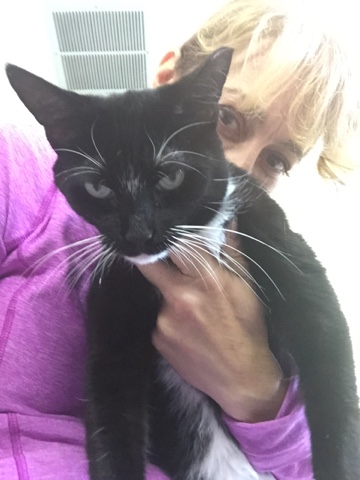
Joey and me,, selfie time.

I have grown to realize that it is important to celebrate the milestones in ones own life. It is an opportunity to take a peek down Memory Lane and appreciate all of those little steps it took to accumulate a path that lead to where your are. How often do we forget to enjoy the journey on the way to the destination? None of us do it enough. We get so caught up in the plowing forward, making it through the day, that we forget to reflect on how we got here and take joy in the being.


Some call it "taking a moment to stop and smell the roses." I need to remind myself to take more time and smell more flowers. The one true gift of living a veterinarians life is that we see lives pass in short tragic snippets. A one year old pup dies before your eyes of the most devastating quickly enveloping cancer known. One minute they are in your hospital being spayed, 6 months later they die within 3 weeks of a small bump that everyone hoped, and banked on likely being nothing more than a bug bite. After all, one year olds don't die of cancer? Do they? Yes, sadly they do.

Life isn't fair. It is fleeting, precious and short. It shimmers in the tiny moments you learn to stop and be grateful for.


This is Joey. He visited yesterday for his annual examination. It is the ninth he has had with me. Joey and I first met 10 years ago when his mom waddled into the clinic with his worried human grandparents in tow. Joey's mom, Sally, was very, very pregnant, but still true to the Labrador that she was, as happy as ever to to see us. Her human parents had done the best they could to prepare themselves, but when moment of delivery arrived they decided to leave it to the vet experts. Little did anyone know I was a far cry from anything considered a "veterinary expert". I was a brand new vet. I remember looking at Sally. Sally remained calm, grinning, and thankfully not asking for my references. I was just as you would expect;, nervous, excited, and desperately trying to recall every nugget of information I had stuffed into my brain those 4 years of vet school. Maybe Sally knew what I didn't? Maybe she sensed that I was going to do everything I could to take good care of her and her tiny baby specks safely snuggling inside her belly? Maybe she believed me when I told myself quietly that what I lacked in experience I sincerely made up for in ambition. In true professional manner I kept my fear and  insecurity to myself. Sally's first stop when she bobbed into the clinic was a preg check radiograph. Vet school teaches us to take a belly x-ray so we can count the babies. We are told to count the number of spines and the number of skulls as a way to double check the babies (they should both be the same number). But Sally's radiograph was a spaghetti storm of spines and backbones.. Sally's bloated belly had so many babies in it that we all took turns with our counts. Our best guess was "more than 10? We think?" (So much for imbibing professional confidence. Seems I can't even count? Sigh...)

That afternoon Sally and I delivered her 12 round wiggly furballed puppies. The pups ranged from chocolate, to golden yellow, and black. She had every lab color allowed. Thankfully, they were each perfect bundles of smooshed faces, paddled paws and cooing adorableness. 

C-sections are one of those places where a vet gets lost in the process of being immersed in a belly of new life. It is also undeniably one of the happiest occasions in a vet clinic. Christmas Village comes alive with helpers swaddling, rocking, rubbing, aspirating, and assessing newborns. The experienced technicians train the new technicians on how to stimulate breathing, tie off umbilical cords, warm lifeless bodies to elicit that miraculous first cry of "hello new world, I'm here!". It is not something we do daily at my practice, but is something that reminds us all that we have a strong maternal tug that science has yet to pinpoint and market in a bottle.

Joey was one of those 12 babies. I was the first face he saw. 


It has been a decade since I joined Jarrettsville Vet. A decade I have spent with thousands of other families. It is a gift that the general practitioner covets. What I lack in credentialed specialty fees of one time patients seeking surgery, echocardiograms, oncology, etc., I make up for in scrapbooks of the passing years. The beauty of adding a patina to the richness that only passing time and tender moments together brings.

Joey and I have been together through every puppy vaccine. The ace bandage that plugged up his intestines requiring his first abdominal exploratory surgery at the ripe age 4 months. His neuter at 6 months old. His next obstructive scare; the pot holder that smelled so good it needed to be eaten at 8 months old. The allergic reactions to some unknown instigator(s) and offender(s). The cruciate repair I did at age 3, which  was also the same year he had his second foreign body removal in his intestines (we never did figure out what that pile of stuff was?). After age 4 Joey was a less frequent visitor, (thanks to the gods his parents prayed to repeatedly). Like many Labs he sort of outgrew his dangerous habits. A few visits for diarrhea, anal sacs, and lumps and bumps sporadically over ages 5-9. Then today, at his 10 year visit it is time to remove a broken tooth. All of those years of lacrosse ball fetching has caused a fractured a molar. So next week our relationship moves into the oral cavity. Our first dental together. The crowing achievement to a lifetime of care and time together. 


Seems I am not doing too bad? A decade with Joey is a fairly accurate list of my veterinary resume that now includes lots of surgeries, vaccines, behavior consults, and a few harrowing moments about just how many times we can easily peek in a belly and incise into the intestines. It is a story of becoming the vet I studied so hard to become. He and I are greying muzzles and appreciation for all that got us here. Like most relationships we are at the place where we know each other and our love runs deep in spite of the many obstacles we faced along the way.

I will see Joey on Tuesday for his first dental and extraction. I know he will wag his tail and run to see me, just  as old friends do.. and I will tell him how lucky I am to know him, take his broken tooth out (worrying about him the entire time, just as I do all of my patients), and when he wakes up I will add another chapter to our book and remind him that I am expecting another decade together.

Here's to hoping that you take a moment to cherish the friends who you share your journey with. Please take time to tell them how much richer they make your life, and make time to celebrate the milestones along the way.

See you Tuesday Joey!

I would love to hear about your experiences! If you have a vet who is a part of your family please share what makes them so special, and how they helped to care for your pets.

If you have a pet related question please visit me on Pawbly.com. Pawbly is a free platform open to anyone who cares about animals. We welcome your questions, advice to others, and helping to build a place where animal care is shared open and freely.

If you would like to learn more about my life as a veterinarian you can follow me on Twitter @FreePetAdvice, on Facebook, or on YouTube.

Friday, October 9, 2015

New Grad Seeking First Job, What Not to Say and Do


OK, this blog needs to start with laying some ground work; the forepart provides credibility, and the second half provides apologies..

I have owned my practice for 10 years. In that decade I have hired 11 veterinarians. I have also  'elected to not retain' all but 4. Now, I am the first person to admit that these numbers are bleak.

Here's my justification for this; I have exceedingly high standards. I am always looking to hire a life long employee. The practice I bought was built on a foundation of this. Jarrettsville Vet has been in existence for almost 80 years. In those 75 plus years I am the third owner. I have a legacy of providing care to generations of families that I hold with great pride and humbling responsibility.

The backbone and ultimate success of providing exceptional care to veterinary patients lies squarely on the shoulders of the veterinarians. The cogs of the practices' engine are powered by the technicians and support staff but the life, death and direction lie in the hands of the vets. My practice is my ultimate responsibility and the amount of trust and liability that is employed by the vets I hire will make or break the practice.

It is a matter of perspective and position.

It is also the preamble to this blog..

I am again in the arduous place of finding a new vet to add to our roster. I have found that this is becoming a more difficult task with each passing year. The list of qualified candidates seems to be dwindling. There are fewer and fewer exceptional vets looking for new jobs. I also know what I am looking for someone who will seamlessly integrate into our existing bustling quirky family. I have gotten much faster at weeding out potential veterinary candidates.

Established veterinarians seek higher paying jobs with fewer hours and more restrictions. Their expertise pulls a higher price tag and a longer list of requirements. Jarrettsville Vet is a place that doesn't turn away pets in need. We are not about the money, therefore, I cannot hire a vet whose primary purpose is monetary compensation. More and more veterinarians are females and more of them have families. They want day work exclusively and in general seem to not want to do much, if any, surgery. I feel obligated to provide evening hours to our clients and we are open 7 days a week. I also want a vet who will be willing to do an emergency surgery when needed instead of punting it to the emergency clinic every single time. I am determined to hold on to a traditional veterinary hospital as we advance our services, reach, and assistance. I am also unwilling to sacrifice exceptional care and medicine. Our clients pay for, trust us, and return expecting these.

When you work as many hours as we do you have to maintain a healthy happy practice. Vets at Jarrettsville Vet have to be liked and likable on top of being intelligent, compassionate, and capable.

So, here I go again looking for a new vet...


There are a few veterinary specific career sites available for posting veterinary openings. This is the ad I posted a few weeks ago;

Small animal, 4 doctor, 7 day/week practice with high quality medicine, equipment, staff, and dedication to caring for our patients and clients. Excellent pay or commission, benefits, and work schedule. Must be proficient in surgery, taking great care of our clients and patients. We provide a happy, healthy, fulfilling place to work, without micro-management. We are a clinic with a big heart and dedication to living by our motto "compassion comes first." Please fax a resume to 410-692-6283, visit jarrettsvillevet.com, or stop in to say hello. 


This time I excluded "DVM equivalents," a choice I had allowed in previous postings. A DVM equivalent is usually a foreign trained veterinarian. Although I do not question their ability or proficiency I have not found any in our rural area. They are vets who live far far away (often the other side of the country, or another country all together). I am incredibly reluctant to hire someone to have them move to the quiet rolling hills of Maryland when I am not confident they will pan out.


That leaves me to getting applicants who are primarily new graduates within our area.

New graduates have their own set of advantages and disadvantages. They universally lack experience, but they do arrive ready to work hard and with the stamina that youth provides. They are malleable and genuine. They also often lack communication skills and the intuition of a seasoned vet. There is also a huge expectation for a commitment on the practices part to hand holding and mentoring.

New graduates are accompanied by a resume laden with graduation dates and locations. It is a short list of mostly irrelevant skills with no corresponding real-life meaning. A new graduates resume only needs two things for me to decide whether or not I will offer an interview. Location and school. The rest is fluff that will hurt a candidate as much as the candidates mistakenly believe it will help them.

Case in point; The sweetest well-dressed soon-to-be new graduate arrives with resume in hand, demure shy smile on her hopeful fresh face. Her resume has no date prior to her college graduation. She, and her overwhelming desire to be a vet, do not appear to exist prior to May 2012.

And so begins her interview;

"So, why did you choose a foreign vet school?" I ask.

"I was getting ready to graduate (from college) and I had missed the fall entry application times for the US vet schools. So, I applied to a foreign school and was accepted."
No qualifications or experience needed. Apply, get accepted, start 2-3 months later. I am left pondering.. Who decides at the end of college that they want go to vet school? Then impetuously decides to fill out an application.... Small road block in timing? It's OK apply to the paid ad that pops up first anytime you type in "vet school". Voila! for profit vet school at your service.

Question number two; "What are your interests within veterinary medicine?"

"I wanted to focus on Zoo Medicine but that takes really good grades. So, now I think I want to focus on physical rehab."
We don't have this at my practice, nor was there any mention of whether or not we might be interested in providing it.

Question number three; "What kind of practice are you looking for?"

"I am hoping to find a practice with a good mentorship program."
Every new vet, especially those without a shred of experience outside the classroom setting, wants and needs this. I admit I was one of these graduates. Any conscientious new vet needs to admit this. I suppose it would be far scarier to have a new vet so cocky that they thought they didn't need coaching? Every time I get an application that says "I love animals" as the 'reason for interest in this position' I want to throw something. "Mentorship" is on par with "I love animals."

As a practice owner I know every new grad need needs to be trained, A LOT. I sat listening to her blossuming excitement to enter a field she appears to know little about, has a path long and bumpy in front of her, and I am still baffled that she never spent a second learning about her career choice before she got herself $200,000 plus in debt.

I offered advice. I knew I shouldn't have, but I was burgeoning with empathy. She probably took it as chastising but this girl is entering a world that can break her heart, or kill her.

I am incensed by the lack of investment and parenting her vet school provided her as they set her out into the real world? It is, in my opinion, criminal.

"Do you have any experience in surgery?" This was a clear requirement in my job ad. There is no mention of it on her resume.

"I have assisted in surgeries, spays and neuters. I am a hard worker and willing to learn anything. I am hoping to find a mentor to help in this area." The overall mood was growing more somber.

"My clients and their pets are a responsibility I hold dear. I am not going to feel right about an inexperienced vet performing surgery on them. I am as worried about your skills as you are." This statement is met by an awed realization.

This is not going well. I cannot lie and assuage her. She was not prepared for honest bluntness. She will either walk away from this interview having learned a few things, and more prepared the next time, or, she will find an employer who knows how to provide alluring smoke and mirrors and make her feel all warm and fuzzy. She will jump on that job, that will either pay her peanuts, which she will now willingly, and knowingly accept, then get dumped on with ridiculous hours without that promised mentor by her side. She will be thrown to the wolves like so many of us are. Or, she will find a practice with other new graduates who will at least provide her comradery amidst the abuse. She will not likely find her utopia.

She will not however be very hard pressed to find, excellent pay, mentorship, and the vital training she needs with transparency. Not unless she works for a family member. No one else can invest the time and attention needed when they are already short handed.

"Do you have any other questions for me?" Our time was running out and the interview was closing.
We had intentionally not talked about money. An employer can tell much about a candidate by omitting key questions. I don't omit to be harsh, I omit to allow her to speak up, stand up for herself, and become assertive. She will need to learn it someday.

"Well, I know I need to ask about salary. Although I know nothing about it." She says, full on smile.

OK, honesty is always the best policy, but, please, don't go to an employer without knowing a few key important facts.

"Here are my concerns. I am assuming that you are in debt from attending the most expensive veterinary college on the planet. For this job to work for you long term you need to know how much you need to make to pay off your debt in a reasonable fashion. If you can't pay your bills you will not be happy here. Do you know what your numbers are?"

Blank stare.

Goodness am I worried about this fledgling.

She departed quickly. We both know that we aren't a good match. I sincerely wish her well.


If you are a new graduate looking for your first job here is my advice;
  • Ask about your predecessor? Ask the boss, the other vets, and the staff. If there is not a consistent answer doubt the bosses perception.
  • If the employer brags about "all of their fancy equipment" consider this smoke. Look for a mirror, they are lying around somewhere. The real heart of a practice lies in the people, not the stuff.
  • Listen and take notes during your interview. I never see a new grad arrive to an interview prepared. They get so flustered and overwhelmed they forget to ask important and relevant questions. We all takes notes during an exam, key pieces of information to formulate our diagnosis, and yet, every candidate I have ever met with sits idly by nodding their heads. Poor SOAP practice.
  • Stay unemotional. This is a big decision. Be objective.
  • Invest time in knowing what you are getting into. It is unimaginable that so many new grads make a decision after an interview and a few hours on a working interview. We advise our clients to spend hours, days, and even foster a pet for weeks, before making a knee jerk decision to buy, adopt, make a life long commitment to their pet, and there we go being just as impatient and uneducated.
  • Don't list other interests that do not pertain to your current job seeking quest. Why would I, or anyone else, want to hire you, mentor you, train you, and then have you leave in a year or two to pursue Zoo medicine, or physical therapy? At least talk to your potential employer about investing in you and a new modality to add to the practices repertoire.
  • If you are graduating from vet school in debt you should have a very good idea of how long it will take you pay that off. There are rumors of federal law changing to require schools to discuss the debt you will acquire if you attend. Much like the reforms made to home ownership and credit cards. Consumers should be cognizant of the financial impact of the decisions they make. I know how blind desire to go to vet school can be. But, you will graduate and there will be a life after school. Five years into practice I promise you will be worried about how you will ever get out of your student debt.
  • Research the vet, practice, and learn as much as you can before you show up for an interview. Google, Yelp and investigate the Facebook page of the vet practice. Sell the assets you share with the practice and the vets who work there. 
  • Remember that a great practice will see you as an incredible asset. You are an investment and there has to be a return on our investment. If you don't fit in it affects the bottom line. If the practice cannot profit from you we will be forced to find another vet.
  • Finding a job is equivalent to being a participant on a dating site. You show me your good side, I show you mine. Except I am eHarmony.com, I want a life long relationship based upon trust and knowing each other. Too many new grads unknowingly get wooed into a one year stand with an initial blissful courting period lacking a foundation for a career long commitment. 365 days later those yearling grads are left feeling a little jilted, over promised under-delivered, taken advantage of and left walking away looking for that second boyfriend with the complete opposite qualities that that first boyfriend had. Second jobs are too often rebounds. Spend the time answering the "436 questions to find your perfect match." And, be the smart other half to any healthy relationship, stay out of the minefield of unsupportable debt. Don't want the boyfriend with crippling credit card debt? Then don't be the DVM girlfriend with bankruptcy proof inescapable educational debt.


Important information for new grads.

AVMA guide to Financing Your Veterinary Medical Education.

AVMA Survey Reveals Bleak Situation for New Veterinary Graduates. 2012

Veterinary Practice News, Too Many Indebted Veterinary Chase Too Few Jobs. July 2012

High Debt and Falling Demand Trap New Vets. Ross student owes more than $300,00 after graduation.

DVM 360, Finding Your First Job.

My related blogs;

Too Afraid To Fail. When your fear costs your patients.

My Top 10 Advice to New Vets.

Compassion Fatigue

The Holes In The Safety Net. Suicide in Veterinary Medicine.

I am interested in your thoughts. Please leave a comment about your first job experience, or your thoughts on the veterinary career paths of your friends, I want to hear about your experience.

If you have a pet question you can find me at Pawbly.com. Pawbly is a free online advisory platform to help people and their pets.

If you would like to know more about Jarrettsville Veterinary Center please visit our website or Facebook page.

I am also on Twitter @FreePetAdvice, YouTube and Meerkat @FreePetAdvice.


Saturday, September 26, 2015

Refining Your Specialty. A college students project.

I received a request for an online interview. I thought there were some very good questions that I might have benefited from if I had been a bit more inquisitive, slightly  more trusting of those who walked before me, and much less blindly determined to become what I believed I was destined to be.

Thomas

Hi,

My name is Christine and I'm very interested in veterinary medicine. I'm currently a student at XX University and I'm working towards becoming a veterinarian.  I found your blog and I have watched a few of your YouTube videos and I have really enjoyed them. I was hoping you could answer some questions for an aspiring veterinarian. I'm doing a project in one of my classes that is going to help us refine our specialty, so if you could please take a little bit of time to answer these question, it would be so helpful.


Thank you so much for taking the time to read this. I appreciate it so much.
Christine

Hello Christine,
Here are my answers,

1) What do you use in your every day work? (e.g. tools, critical thinking, computer, assistants, etc.)
 I  use my brain, my experience, and a few very important tools that include a stethoscope, microscope, x-ray, computer for patient records and research, and a whole host of ancillary things like in house lab equipment, surgery equipment, laser, tools for the eyes, ears, nose, throat, and the rest of the body (like a scale). Oh, and books, I still use lots of reference books!

2) What is a typical day at work for you?
 Typically I work from 9 am to 6 pm, or if I work the afternoon shift 1 pm to 9 pm. 5 days a week.

3) What are a few of the most important things you need to know to be a successful veterinarian?
You need to know who you are, what you stand for and why you are dedicated to becoming a vet. There will be many challenging days ahead and if your heart and soul are not invested as much as your time and money is you will end up like the many other veterinarians I know who have left veterinary medicine. Many of us enter vet school with the best and most noble of intentions, work our butts off to get in and out of vet school and then leave bitter and heartbroken when the realities of real-life practice settle in.

4) What is something important that being a veterinarian taught you, but that vet school didn't teach you?
That each case is a mystery with a plot, a heroine (or two), a few bad guys (cancer/disease, etc), a long list of characters, and lots of twists and turns along the way. Sometimes there are happy endings and sometimes life doesn't give you a "happily ever after".. but there is always a "The End"..but all the stuff in between the opening line and the last chapter are where the fun, the beauty, and the passion of purpose lie. That's the best part..that's what vet school doesn't teach you. That making connections, living a life you are proud of and that helps others (even if it a tiny rescued kitten that no one ever knows you saved) is what carries you through the tough times.

5) How has social media helped you in your field?
Social media has connected me with people and places I would otherwise never had the opportunity to assist. It is the reason I created Pawbly.com. I can help people around the world take better care of their pets. I have extended my reach and my purpose across all socio-economic and geophysical boundaries.

I hope this helps. I would like to use this for my blog. I hope you are ok with that? I think these were some excellent questions!

P.S. Please think long, hard, and objectively about vet school. No one tells you that  it can cost you a fortune and you will someday be questioning why you spent so much time, energy and money to make so little money. I know no one wants to think about income when you are in high school/college, BUT, someday you will want a house, a car, and to put your kids through college,,, and someday always comes. I worked for a vet for a long time who I loved and respected. He told me everyday to find another career. He said it because he loved me too. Neither one of us ever wanted to be anything other than a veterinarian, but being a veterinarian is hard work. Emotionally, physically, and often financially. I know veterinarians who owe more than $200,000 in student loans and make $50,000. They are 10 years out of vet school and have no way out from their debt for at least another 10  years. That just isn't fair or sensible.

Good Luck in school,

Krista Magnifico, DVM

Wallace

I welcome your thoughts and feedback. Join me here, or you can ask me a pet centered question at Pawbly.com. Pawbly is free to use and open to everyone who wants to help pets and their people.

I am also on Twitter @FreePetAdvice and at the clinic Jarrettsville Vet, living the dream (happy and not-always happy endings) in Jarrettsville Maryland.

Friday, September 18, 2015

Mucous. The Gooey Lubricant that Helps the Poop Pass Through. When to worry about mucous in the stool.

I was asked to help contribute to this article for Care.com. It is not the most glamorous topic in veterinary medicine, but there are important clues to your pets health in the subtle characteristics of your pets feces.

Mucus in Dog Stool: The Common Causes
There are benign, normal reasons for mucus in dog stool but here's when you should alert your vet.

Amy Aitman, Contributor

Articles> Mucus in Dog Stool: The Common Causes
A dog jumps and runs in a field

You'd do anything for your dog, even check his stool, especially if you thought
something could be wrong. Notice any differences in your dog's bowel movements
lately? Although mucus in dog stool is very common, and necessary, sometimes
it warrants a trip to the veterinarian.

What Is Mucus in Dog Stool?
Dog stool often has mucus. It's a slime-like substance made by the intestines to
keep the lining of the colon lubricated and moist and is perfectly healthy. "A little
bit of mucus is always  going to be normal and is actually a good part of the GI
[gastrointestinal] function. It's part of the normal cell turnover in the gut, and it's
part of the natural lubrication in the gut.

Without it, defecating is much more strained and difficult," says Dr. Krista Magnifico,
a veterinarian at Jarrettsville Veterinary Center and the founder of Pawbly.
Dr. Kimberly Hammer, a veterinarian at NorthStar VETS and a diplomat of the
American College of Veterinary Internal Medicine, agrees that mucus in stool is
normal. "Mucus is often either the dead cells being shed from the lining  from the
colon or secretion from the colon and is usually not a concern," she says.

When Is It a Problem for Your Dog?
"Part of being a really great and responsible pet parent means you really need to know
what is going into and out of your dog," says Dr. Magnifico. And that means knowing not
just what you are feeding him, but what he found to ingest all on his own. Think your dog's
mucus is problematic?

Here's when you should call the vet:
  • Your Dog has Diarrhea
    Both vets say when mucus is accompanied by diarrhea, it's something that could warrant a trip to the vet. "When your dog has diarrhea that persists longer than 24 hours, and is accompanied by mucus in the stool, you should go see your vet," says Dr. Hammer.
     
  • Any Part of the Stool is Changing
    "If you've suddenly got really, really soft stool and a lot of mucus, or a lot of mucus and not very much stool, that could indicate that there is a problem," says Dr. Magnifico.
     
  • You Witness a Change of Color
    "The mucus will only change color when there is something else present in it. So, if there's excessive bile or blood, this will change the color of the mucus and could mean something is wrong," says Dr. Magnifico.
     
  • You Dog is Only Producing Mucus
    When you see your dog overly straining, and nothing is coming out but mucus, this could mean something is wrong in the GI tract. Both veterinarians agree you need to see a pattern of this occurring before taking your dog to see a vet. "The cell turnover in the gut is so rapid and changes quickly, " says Dr. Magnifico. You should wait it out. Dr. Hammer agrees, "If your dog is only producing mucus in a 24-hour time period, it is time to call the vet."
     
  • Your Dog isn't Eating or Drinking
    "A lot of times dogs will get better with conservative measures at home," explains Dr. Hammer. "Sometimes it can be a bland diet that helps, but if your pet is not eating or drinking, this can be another warning sign that something is wrong." Dr. Hammer warns that if your pet is not drinking anything, don't wait 24 hours to see improvements, especially if you notice other symptoms of lethargy. Just call your vet.

Talking to Your Dog Sitter
If you're worried about the state of your dog's GI tract and health, talk to your dog sitter or dog walker. Make sure he or she keeps track of everything your dog is ingesting, whether it's the food given to the dog directly or a piece of pizza he found on the sidewalk.

You're not with your dog all day and can't tell if she's been straining to poop and just getting mucus, but your pet sitter probably can. Tell your pet sitter or dog walker your concerns and make sure he or she watches your dog closely during the time with your pet. With these precautions, soon your only poo concern will be scooping it off the ground.

And read Dog Vomiting Bile: A Diet Plan for Getting Your Dog Back to Normal.

Amy Aitman is a freelance writer with a passion for the four-legged creatures in this world, especially her 13-year-old Westie, Buckles. Follow her on Twitter.

* This article is for general informational purposes only. It is not intended nor implied to be providing medical advice and is not a substitute for such advice. The reader should always consult a health care provider concerning any medical condition or treatment plan. NeitherCare.com nor the author assumes any responsibility or liability with respect to use of any information contained herein.
If you have a pet question of any kind you can find a whole community of pet loving people at Pawbly.com. Pawbly is free to use and open to anyone who cares about the wonderful pets we share our lives with. Meet pet people from all over the globe at Pawbly.
If you would like to talk to me about your pets mucus, or any other pet related topic find me at Jarrettsville Vet in Jarrettsville Maryland. Or, find me on Twitter @FreePetAdvice.

Wednesday, September 9, 2015

The 20% that Suck Up The 80%. What to do with your "BAD" clients.

There is some archaic hidden law somewhere buried in the first veterinary business text book written that states that "20% of your clients comprise 80% of your ____ ."
This blank can be filled in with a multitude of phrases. These include;
  • business
  • heartache
  • stress
  • revenue stream,
  • etc..
Jekyll reminds Joe who is in charge.
It is not a concept that is unique to our industry. I am sure  that you could ask every other service industry and the same would apply.

My hairdresser, dermatologist, and salon friends would all agree. 80% of your clients walked into your life long ago as a customer, but you now consider them a friend. And then you have the 20% who cause you to walk on eggshells fearful at every interaction that the tongue will lash and the feelings will be hurt,,, again.

I suppose that some business savvy individuals have taken this fact and settled upon accepting it. No hard feelings, IF, there are no feelings involved. Some people cut whomever's hair is sitting in the seat and should they never see them again, well, that's OK. No gain, no loss. In veterinary medicine many a 'relief' vet has been born because of this. 

Every vet must decide where they fall on the business spectrum. The entire P&L sheet of every business has to have some loose guidelines to assist you when it comes to managing time, resources, and turnover. In many fields a one time client is perfectly acceptable. You may not be able to build a solid legacy on burning people, but if they are one trick ponies and your audience reach is large enough you can survive and pay your mortgage. If, however, your goal is a bit loftier you begin to scrutinize the relationships and draw some lines.

Dunkin. The Jarrettsville Vet 2015  rescue.
He never has the chips in his favor and he never lets it stop  his smile.

When I bought my practice 10 years ago we served a vast population of pet people across both geographical and ethical landscapes. It was a nice even pie shaped chart of family pets, breeders, rescue work, and clients who defaulted on paying their bill and were forgiven 12 months later to repeat the same year after year. The former practice owner was loved far and wide as a good friend to all. He also ran a business with minimal overhead and minimal stress. He chose to ignore a problem and most of the time they went away without his attention. He was tired, financially secure and had long ago determined that very little was worth his worry.

Ten years later I am still paying him back for buying his practice and I still have to clean house to be able to afford those checks I write to both him and the banks. I also lack the DNA sequence that allows me to tolerate the 20% "bad" clients.

Labels, oh, how we try to avoid them, and oh, how they are unavoidable. "Bad" clients are the source of their own veterinary doctorate discussion. The label I prescribe is never the exact label as another vet would prescribe. But, if you don't pay attention to your business your business will pay for them a thousand times over.

Not too many vets will allow a non paying client return visits. How can you pay your employees, or the bank if you do? We had to work very hard to avoid the secret walk-outs on the bill  that had been "dismissed and forgiven" in the past. I also had to have some tough conversations with some self described "long term clients" who never paid in the past and couldn't believe we were not running them a tab any longer.

Not too many vets will allow a client who can't pay sign over their treatable pet to us? Could I send that anemic kitten to the bank as payment for my note? She is after all "healthy and adorable!"

How about the guy who threatens, screams, and demands unrealistic exam walk-ins at his convenience, and then is a no show about 50% of the time? He is a jerk, he knows he is a jerk, he seems somewhat proud about being a jerk, and he will leave a trail of dismay, disgust and destruction a mile wide for the rest of the day. He is also a pet parent who obsesses over his dogs and cannot see his behavior costs his dogs the care they need and deserve. He is part of my left over 20%. He is one of my remaining "bad" clients. These people cost you, your time, your staff's ability to want to come back to work the next day and they need to be addressed or your business will pay for them.


The first 19% were fairly easy to eradicate;
  • Non-paying or cash only clients are marked with a special folder. In the past the only person who knew who wasn't paying was the bookkeeper who worked about three hours once a week. These clients would come in for an examination authorize all the care the pet needed and walk-out never to be heard from again,,, until the next time their pet was sick.  Putting your staff in the middle of payment debates is not fair, so we devised a plan to notify the staff, without embarrassing the client in advance. Special folder clients are provided an examination and a written estimate which requires a down payment for anything further. I can accept paying a vet for their time and expertise, but I am not going to be as silly as my predecessor and write off a shyster year after year when we allowed them to dig a debt they couldn't see out of. We either go into each case knowing we are doing it pro bono, or get some form of payment in advance. Expecting these clients to change their modus operandi is naive and leaves us feeling as the jaded ex-girlfriend every time.
  • Breeders/Hoarders/Abusers. (I know, I will pay for this bit of confession). Most of the breeders my clinic served before I bought it were hoarders and neglectful abusers. Their dogs were sick, diseased, parasite ridden, unvaccinated, puppy mill dogs. The Teacup pups were emaciated, bony, barely able to stand, matted and petrified. They never left their metal cages and therefore being in the clinic was tantamount to landing on Mars. The German Shepherds fetched a fine price on Craig's List but all had awful hips which were passed on to their offspring. I would cringe every time a GS pup from our breeder showed up at 6-9 months old with a "limp." We euthanized more adolescent dogs simply due to poor breeding than I care to ever recall. The breeders ran a business on a shoe string and their dogs bore the brunt of that business plan.
  • Fellow healthcare providers. What is the saying? "A little knowledge is a dangerous thing." Human healthcare professionals tend to guesstimate their pets ailments, downplay the repercussions, or they avoid the whole unnecessary vet visit all together until the at home plan results in a full blown disaster. For these clients I tried very hard to convert "self-reliant" into "healthcare partners". I provide accessibility and we walk through treatment plans (many of them started at home) together. It has created some strong friendships and excellent referrals from their friends.
  • Abusive, caustic, abrasive, soul-sucking jerks. Ugh, these people will drive you to the pink juice, and not the one that I prefer dry and dirty with extra olives. How do you work around people who destroy your ability to serve your clients with compassion, respect, and integrity? I promise that if you cannot separate yourself from the people who hurt and destroy you you won't be able to walk away from any service industry feeling as if you made a positive mark on the world we share with each other.

The last 1%
  • The last one percent are the people I have the hardest time parting ways with. They yank at the heart with their undeniable love for their pet(s), but they cannot care for them adequately. Some due to financial hardship, others due to mental duress. I am unable to turn away a client with a pet in need. I cannot make a solid business decision when I know I can help and they only lack the resources to provide payment. I have devised multiple options to help  with these cases. We have a wonderful rescue who will take ownership if we ask, or a third party billing agency when the credit cards are declined. 
  • I have other clients who are so emotionally bound to their pets that they are unable to face the reality of mortality. The gradual decline of a pet can lead to the decline of a client. There are clients who ask for services I do not, and cannot, provide. These include mass euthanasia's should the client die before their pets do, and fears about how the pet(s) will survive without them? Emotional attachments built on a foundation of unrealistic expectations are sticky difficult relationships to navigate. They can become toxic, dangerously intertwined and ultimately lead to someone asking you for services you cannot ethically, morally, or logistically manage. You can find yourself stuck in the rabbit hole trying to care for both the passionate and incapacitated. And, sometimes the lives you advocate for change from domestic to human. And, sometimes you don't know who your license serves?

There are a few "Dear John" letters waiting for me to write. Break-ups are always hard. They are especially painful when there are kids involved. I will miss the kids. A lot.


I am available (if you are nice and a good pet parent) at Jarrettsville Vet, in bucolic Jarrettsville Maryland.

If you are a pet lover please join me on Pawbly.com. Pawbly is a free pet loving place to share  and exchange information.

I am also on Twitter @FreePetAdvice. 

Monday, September 7, 2015

Damaged Ear Tip, Canine Bloody Ears. The at home fix.


This  is Meiko. He is a 3 year old Boxer who lives in a household of rough play and constant  activity.

One afternoon Meiko's dad arrived home from work to find the melee had proven too much for him. The result of the days playtime was a painful, red, bleeding, sore ear. Meiko did what all pets with painful ears do, he shook his head, a lot. Head shaking causes the ear pinna (ear flaps) to hit the side of the face and top of the head and this flailing motion ruptures the blood vessels in the ear and causes the ear tips to bleed. When you come home from work, not expecting more than a happy wagging pup to greet you and instead find yourself in the midst of a CSI gunshot victim scene the amount of splatter blood can catch you by surprise, never mind flat out alarm you.

Meiko and his dad arrived at the clinic a few minutes later. Head holding and ear shaking were met with firm discouraging "No's!"


Meiko's dad wanted two things;
1. Stop the bleeding
2. Close the wound that was causing the bleeding.

Perfectly understandable when the tiny blood splatter was flying around the room, walls, floors, ceilings, it was a perfect F=ma equation. Those tiny micr-droplets can soar great distances with just the right trajectory and acceleration.


There are moments in some examinations where the few seconds of collecting data require a few paused moments to gently break bad news. 

There I stood holding Meiko's face, gazed at his dads, and broke the news. These can be frustrating. He provided me a slightly sarcastic glance and I'm pretty sure he silently said "don't tell me something I don't want to hear."

It is difficult to treat these wounds. The more they shake the quicker they bleed. 
If you can't stop the head shaking the wound can't allow a blood clot to form and therefore it continues to bleed. Every head shake dislodges the clot and there it goes again bleeding.
The ear needs a few days of rest to let the wound heal.
Suturing it almost never works. It requires anesthesia, further trauma to the pinna edge and one hard head shake and you are back to square one.


So here's what we did for Meiko;

This is a two person job.

Assistant number one holds the dog. As you can see my technician is holding him in a sit position and holding the head still.

The treatment person does the following;
  • We cleaned the ear edge. Warm surgical cleaner (or warm water with a tiny bit of soap  is also fine) for a few minutes was soaked on the open bleeding wound.
  • I then took a non-stick absorbent pad with triple antibiotic ointment and folded it around the ear edge.
  • Next, I wrapped the ear to the top of his head with self-stick bandage (we use Vetwrap, the veterinarians favorite bandage).
  • Lastly, an e-collar to keep the feet and face rubbing from removing the bandage.


Important points;
  • Do not apply the bandage too tight.
  • Do not cut it off and cut the ear hidden underneath.
  • Treat the underlying cause of the ear bleed. For Meiko the cause was rough play, but for some dogs they shake their heads due to allergies, ear infection, or foreign bodies in the ear.
Within about 3 days the bandage should be able to be removed and the ear should finish healing over the next 10-14 days.


Related Blogs;

If you have a pet related question, or dilemma, you can find a whole bunch of helpful pet loving people at Pawbly,com. Pawbly is free to use and open to anyone who loves pets. Please join us in helping pets around the world by sharing your pet knowledge and expertise.

I can also be found on Twitter @FreePetAdvice, or at the clinic, Jarrettsville Vet, in Jarrettsville, Maryland.

Friday, September 4, 2015

Relief. When The Bucket Spills Over and The Calls Keep Comin.


Life is a journey beset with high hopes and many bumps along the way.

The lifeline of every veterinary clinic begins and ends with the availability of a veterinarian to see patients and one of the biggest bumps a practice owner encounters is the unscheduled departure of a vet. This unforeseen bump leaves the appointment schedule in limbo and the practice in need of another licensed body to fill the requested patient visits.

A few weeks ago one of our vets was in a terrible car accident. Thankfully, she is healing, but  her road of hospitals, surgeries, and rehab centers is still ongoing and she has a road of recovery ahead of her that will take months. This has put me in the position of having to consider using the services of a relief vet at the practice. I have been in this position before.

There are a few options available to the practice owner when a veterinarian is needed;

You can slow down your practice. Put up the old "No Vacancy" sign for all of the neighbors to see. It is a statement of a tired vet who cannot manage the requesting pet visit phone calls, or, the beacon of a vet who is considering a change in the path; perhaps retirement, downsizing, or selling and moving on to new pastures? A "No Vacancy" sign is, for me, a sign that a practice is unable to meet current demands and the practice owner is unwilling to change their business profile. Expansion is not for everyone, but being  accessible for your clients should be.

There are two practices near my clinic that are currently not taking new clients. Now, don't get me wrong, everyone sees the pie a little differently, and everyone walks in their own shoes. But, the problem arises when your phone is ringing and you can't answer the request on the other end of the line. One of these practices has decided to send all requests that cannot be met by the available appointment schedule to the ER. The problem is not that those patients will not receive excellent care at the ER, the problem is that many clients do not want to go to the ER, they want to see their vet. Further, some clients cannot afford the ER. Hence, I argue if this model is the best for the patients?

The other clinic is a single doctor practice with a great following. They too run into problems with same day appointment requests. If you are their client and need an appointment within the next few days they will simply tell you that they "have no openings." Thus, my clinic has become very busy and we are in need of a vet to meet these requests.


My options are to hire another vet, or, seek a relief vet to fill-in until the phones slow down.

Relief vets are, by definition, veterinarians who commit to working at your clinic on a short term basis. They are  essentially a substitute teacher. In my view they are however not an ideal employee for many reasons. They lack the desire for long term commitments. Not just  to you, your practice, your employees, but also to your patients. If your goal is to build, maintain, and foster a hospital that has been a part of its community for 70 years. It wasn't built on relationships that lasted one visit. It was built on families who share their family with us. It is about trust, compassion, dedication, ability, and yes, permanence.

Relief is not a word that fits our ability to serve our patients or our clients best long term. And so I struggle with what to do now.

Granted, there are times where a vet is needed with little to no notice for the practice to stay open and on its feet. Seems the last few weeks have proven this point.

My very good friend has spent the last year trying to get out of a vet partnership that no longer works for either party. A year of lawyer tennis, "my lawyer tells your lawyer" and no one gets anywhere because the relationship is so toxic they can't get their anger out of the way, has progressed to two lawyers who have their kids college education paid for and a heated deadlock where ultimatums reside. When the plans to dissolve the practice ownership degraded to the point of only making a move if it would hurt the other party both sides walked away and the clinic was left without a vet and a phone still ringing with appointment requests and a staff still being paid in spite of no paying clients. Two relief vets were called in to fill the walk-out strike.

Perhaps not the routine relief job,  but, a good example of how they work and when they work to the practices advantage.

I also know of relief vets who fill in for maternity leave, vacations, and fill-ins for small practices who need to stay open while the doctor is away. But, this isn't us, and I am not frazzled to the point of walking out, abandoning my clients, and casting my responsibility to a fill-in.

And so, I am at the place I have been before..

I put an ad for a vet out yesterday. I suppose that implies that I am still growing this practice. If my neighbors can't meet the demands I will do my best to pick up their clients and help the pets in need in our community.

Our ad for a new vet;
Veterinarian wanted;
Small animal, 4 doctor, 7 day/wk practice with high quality medicine, equipment, staff, and dedication to caring for our patients and clients. Excellent pay/commission, benefits, and work schedule. Must be proficient in surgery and taking great care of our clients and patients. We provide a happy, healthy, fulfilling place to work, without micro-management. We are a clinic with a big heart and dedication to living by our motto "compassion comes first." Please fax a resume to 410-692-6283, or visit jarrettsvillevet.com, or stop in to say "hello".


If you are a practice owner you undertand my dilemma. If you are my client, you expect my attention to this predicament. If you are a relief vet you, I hope, also understand my position. For the interim I beg everyone to be patient and trust that we are doing our best to meet everyone's needs.

I have changed the way we see overflow appointments, walk-ins, and emergencies. The schedule that worked previously, call open appointments that day and every day following are open and available, has transitioned into days of booked appointments for the week and walk-in hours at 2 pm to 3 pm, and 7 pm to 8 pm Monday through Thursday. We have added emergency slots, and expectations for longer days and required flexibility. We are in critical mode simply to help meet the requests of our clients.

This story will be continued.. please stay tuned....

I am a small animal veterinarian in Northern Maryland. I own and practice at Jarrettsville Vet in Jarrettsville, Maryland. I can be reached there, or via Pawbly.com.

Pawbly is a place for any pet related question. We are free to use and are dedicated to helping people who love pets.

I can also be found on Twitter @FreePetAdvice.

And, if you are on Meerkat, follow my live streams @freepetadvice. I live stream most Mondays from 10-3ish.